Today In History logo TIH
Leonardo da Vinci

Historical Figure

Leonardo da Vinci

1452–1519

Italian polymath (1452–1519)

Late Medieval

Character Profile

The Visionary

Leonardo da Vinci

Leonardo designed a helicopter in 1489. He called it an aerial screw. He drew it in a notebook, in mirror script — he wrote right-to-left, as a privacy measure and because he was left-handed and didn’t want to smear his own ink — and the drawing is precise enough that modern engineers have built working models from it. It doesn’t fly well. Leonardo knew it wouldn’t. He wrote, beside the sketch: “A man with wings large enough and duly connected might learn to overcome the resistance of the air.” He understood the problem was power-to-weight ratio. He lacked, in 1489, any engine capable of solving it. So he drew the shape of the machine that would solve it, four centuries before the machine existed.

He did this over and over. A diving suit with a floating air-bladder on the surface. An armored fighting vehicle — essentially a tank — with cranks to turn the wheels. An automated loom that would have mechanized textile production three hundred years before the Industrial Revolution. A self-supporting bridge for the Sultan of Ottoman — which Leonardo bid for, lost, and which Norwegian engineers built in 2001 based on his drawings. It worked.

The pattern is always the same. He’d see a problem — a river, a flight, a siege — and instead of solving the version of it that was solvable with 1490s tools, he’d solve the version that would be solvable, someday. He was patient with the future in a way that exhausted everyone around him. His patrons wanted statues. He wanted to design the ideal city, with traffic on multiple levels separated by function, canals for waste disposal, and buildings oriented to prevailing winds. He sketched it. Nobody built it. Urban planners in the 20th century began to.

Talk to him and the eerie thing is what he’s not surprised by. Show him a smartphone. He’ll turn it over in his hands, assess the weight, and say something like: “Of course. What does it eat?” Show him an airplane and he’ll want to know the wing-loading calculation. He’ll find our medical imaging beautiful — he dissected thirty corpses by candlelight in a Florence morgue to draw human anatomy, and he wrote, mournfully, that “the human foot is a masterpiece of engineering and a work of art.” He’d consider MRI machines to be confirmation.

What would he predict now? Ask him. He’ll look at you the way he looked at the aerial screw — a long, patient, assessing look — and he’ll say: the next thing is not a new invention. The next thing is finally slowing down long enough to build the ones we already imagined. He’s been watching us, for 500 years, build about 10 percent of what he sketched. He has opinions about that.

He’s not in a hurry. He’s been ahead this whole time.


Three questions to start with:

  • The aerial screw. You knew it wouldn’t fly with 1489 technology. Why did you draw it anyway?
  • You left the Mona Lisa unfinished, the Last Supper half-ruined by your own experimental paint, and thirty commissioned projects incomplete. What did finishing feel like?
  • Of everything you sketched that we eventually built — which one surprised you that we got to, and which one are you disappointed we still haven’t?
Talk to Leonardo da Vinci

Have a conversation with this historical figure through AI

Biography

Leonardo di ser Piero da Vinci was an Italian polymath of the High Renaissance who was active as a painter, draughtsman, engineer, scientist, theorist, sculptor, and architect. While his fame initially rested on his achievements as a painter, he has also become known for his notebooks, in which he made drawings and notes on a variety of subjects, including anatomy, astronomy, botany, cartography, painting, and palaeontology. Leonardo is widely regarded as a genius who epitomised the Renaissance humanist ideal, and his collective works contributed to the development of European art to an extent rivalled only by that of his younger contemporary Michelangelo.

Read more on Wikipedia

Timeline

The story of Leonardo da Vinci, told in moments.

1452 Birth

Born out of wedlock in Vinci, a hill town in Tuscany. His father is a notary. His mother is a peasant named Caterina. Because he is illegitimate, he cannot attend university or join a guild. He is left-handed. He writes backward.

1472 Life

Qualifies as a master in the Guild of Saint Luke in Florence after six years under Andrea del Verrocchio. According to Vasari, Leonardo paints an angel in Verrocchio's Baptism of Christ so well that the master puts down his brush and never paints again. Probably exaggerated. But only slightly.

1482 Life

Moves to Milan and writes a letter to Ludovico Sforza offering his services. The letter lists ten military engineering skills. At the very end, almost as an afterthought, he mentions he can also paint.

1495 Life

Begins painting The Last Supper on a refectory wall in Milan. He experiments with a new technique, painting on dry plaster instead of wet. The colors are richer. The painting starts deteriorating within years. By 1556, Vasari describes it as a "muddle of blots."

1496 Event

Tests a flying machine. It doesn't fly. He fills notebooks with wing designs, gear mechanisms, and observations of bird flight for decades afterward. None of them fly either. The helicopter sketch will wait 450 years for the right engine.

1503 Life

Begins the Mona Lisa. He'll carry it with him for sixteen years, retouching it across Italy and into France. He never considers it finished. The subject is Lisa Gherardini, wife of a Florentine silk merchant. She will become the most famous face in art.

1510 Life

Performs illegal human dissections at the Hospital of Santa Maria Nuova in Florence. He dissects over 30 corpses and produces anatomical drawings that won't be surpassed for 300 years. He works at night, in winter, because the bodies rot slower.

1519 Death

Dies at the Chateau du Clos Luce in Amboise, France, a guest of King Francis I. He is 67. He leaves behind roughly 7,200 pages of notes and drawings. No finished treatise on any subject. The notebooks are scattered across Europe. Many are lost. What survives fills thirteen volumes.

Show full timeline (11 entries)
1490 Life

Begins work on the Vitruvian Man. A naked figure inside a circle and a square. Perfect proportions. He draws it in ink on a single sheet. It becomes the most reproduced drawing in history. He never publishes it.

1911 Event

A Louvre employee named Vincenzo Peruggia walks out the door with the Mona Lisa hidden under his coat. The painting is missing for two years. The theft makes it the most famous painting in the world.

2017 Legacy

Salvator Mundi, attributed to Leonardo, sells at Christie's for .3 million. The most expensive painting ever sold at auction. Some scholars doubt he painted more than a few brushstrokes of it. Others doubt it's even finished.

In Their Own Words (20)

Oysters open completely when the moon is full; and when the crab sees one it throws a piece of stone or seaweed into it and the oyster cannot close again so that it serves the crab for meat. Such is the fate of him who opens his mouth too much and thereby puts himself at the mercy of the listener.

As quoted in The 48 Laws of Power (2000) by Robert Greene, p. 33, 2000

Of the horse I will say nothing because I know the times.

This relates to a huge equestrian statue that Leonardo had been commissioned to design and create, but which was not cast until over 500 years later, in 1999, when two huge statues based upon his design were finally made. (c.1497), 1999

Painting is poetry which is seen and not heard, and poetry is a painting which is heard but not seen. These two arts, you may call them both either poetry or painting, have here interchanged the senses by which they penetrate to the intellect.

A Treatise on Painting (1651); "The Paragone"; compiled by Francesco Melzi prior to 1542, first published as Trattato della pittura by Raffaelo du Fresne (1651), 1651

truovasi di miglio i(n) miglio bone osteriee. (Ancient Italian)

You can find good taverns from mile to mile., 1478

3 miglia più in là si trova li edifici della vena del rame e dello argento, presso una terra detta Pra Santo Petro e vene di ferro e cose fantastiche. (Ancient Italian)

3 miles further on are the buildings of the vein of copper and silver, near a land called Prato San Pietro and veins of iron and fantastic things. (paper F.573), 1478

Artifacts (15)

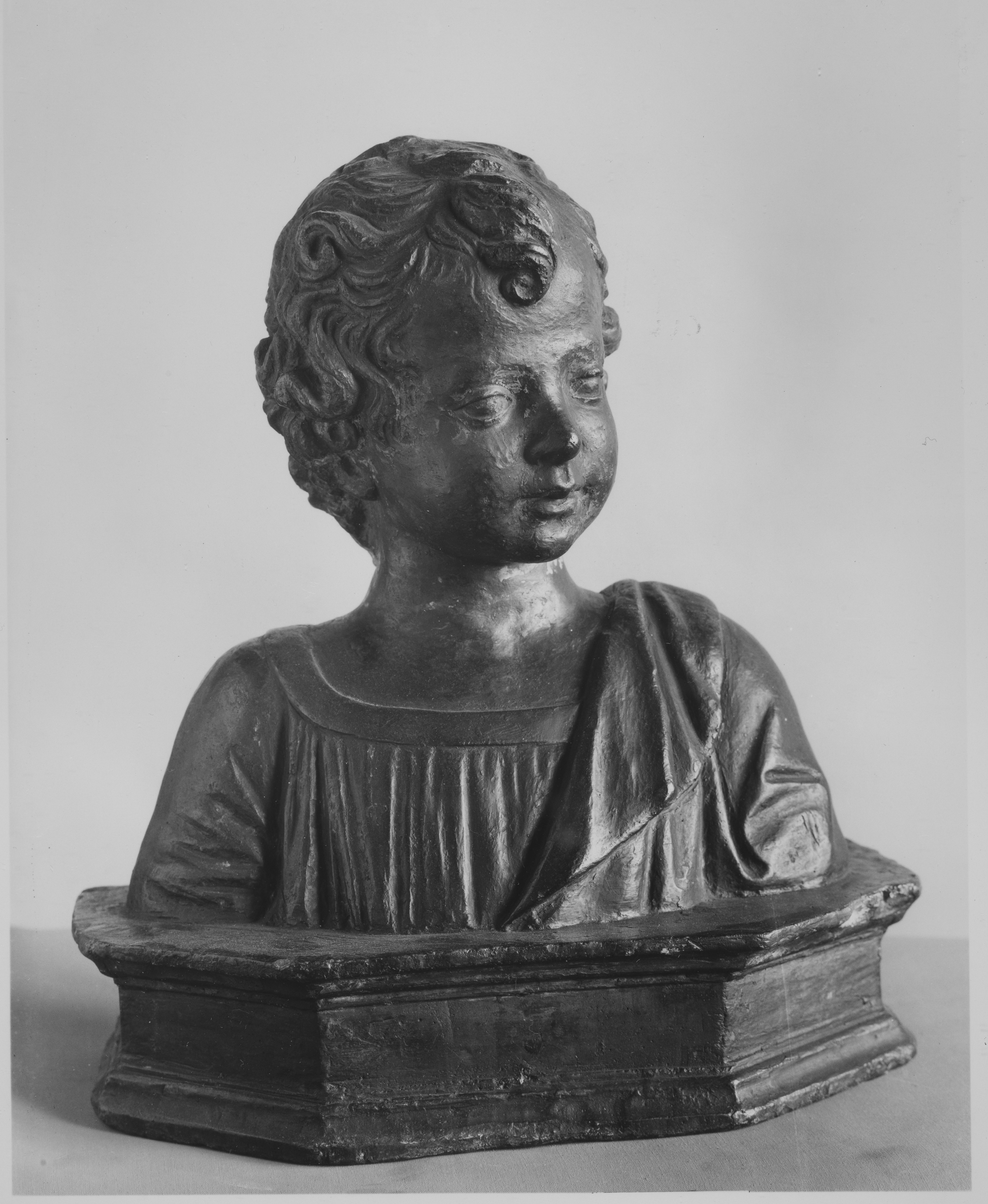
Child

Pierino da Vinci

15th–16th century · Painted stucco
The Met View

Leonardo da Vinci

Otzen, Per Marquard (f.1944) bladtegner

Still image
europeana View

Leonardo Da Vinci

Still image
europeana View

Leonardo Da Vinci

Still image
europeana View

Leonardo Da Vinci

Still image
europeana View

Leonardo da Vinci

#Joseph_Fischer_Ausführende_r_Künstler_in

print graphic
europeana View

Leonardo da Vinci

europeana View

Leonardo da Vinci

photograph
europeana View

Leonardo da Vinci

Unbekannter Fotograf (Herstellung) (Fotograf)

europeana View

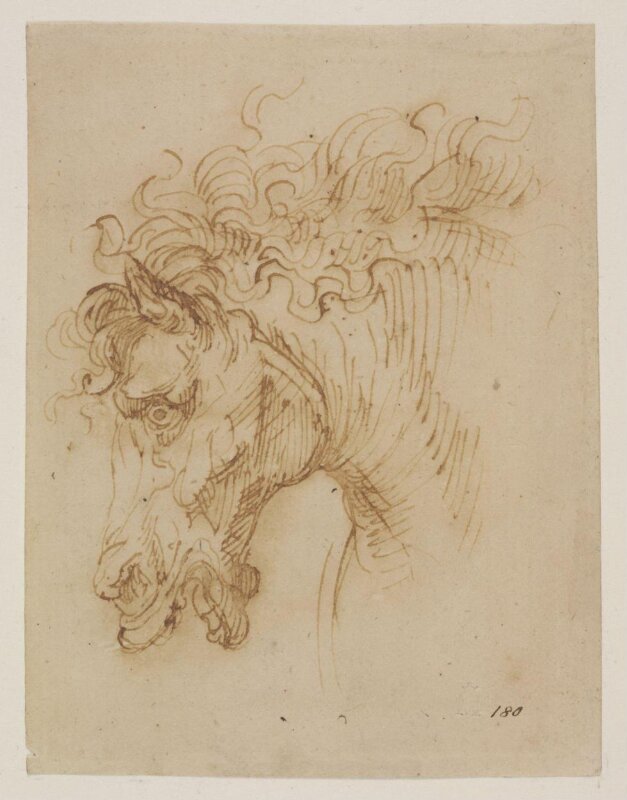
Untitled

da Vinci, Leonardo

vam View

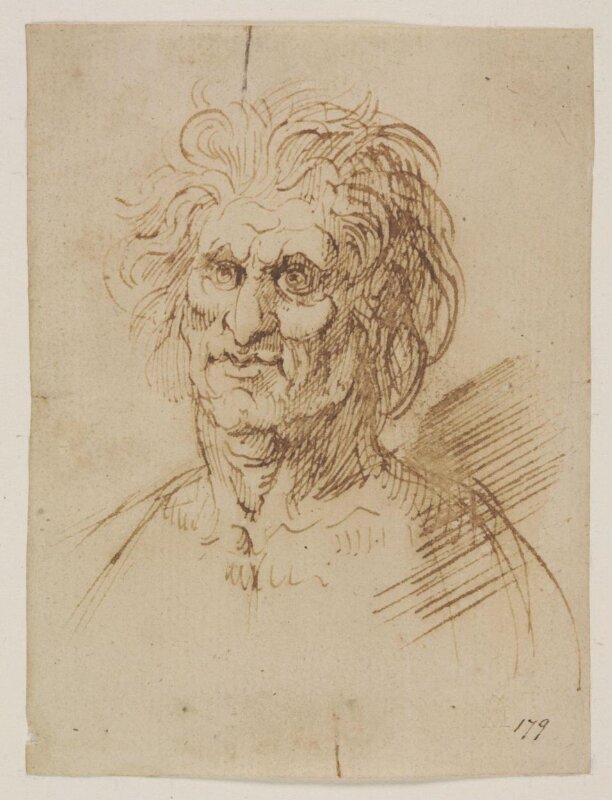
Untitled

da Vinci, Leonardo

vam View

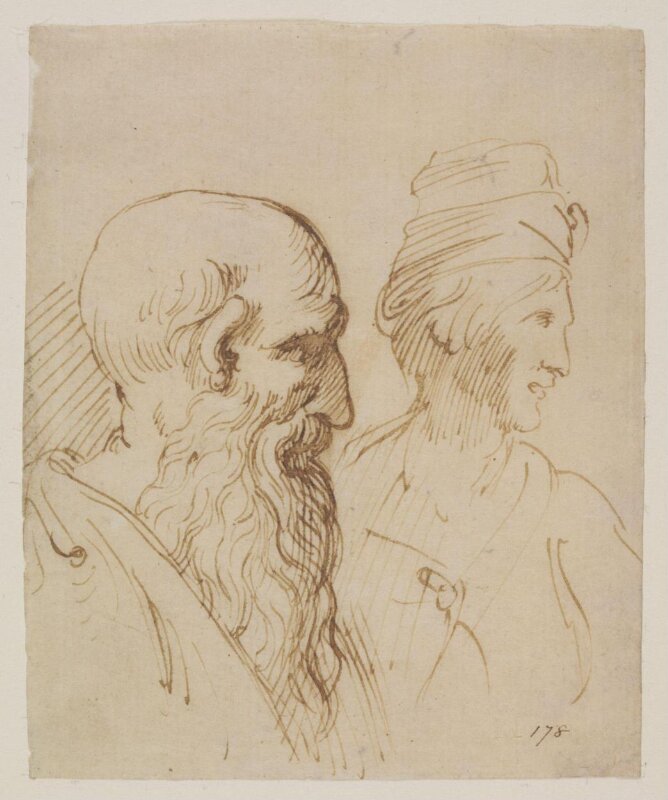
Untitled

da Vinci, Leonardo

vam View

Leonardo da Vinci

Italienischer Maler, Bildhauer, Architekt, Musiker, Mechaniker, Ingenieur und Naturphilosoph; wird als Universalgenie der Renaissance bezeichnet

1452

The Notebooks of Leonardo Da Vinci — Complete

This eBook was produced by Charles Aldarondo and the Distributed Proofreaders team. The Notebooks of Leonardo Da Vinci Volume 1 Translated by Jean Paul...

1452

The Notebooks of Leonardo Da Vinci — Volume 1

This eBook was produced by Charles Aldarondo and the Distributed Proofreaders team. The Notebooks of Leonardo Da Vinci Volume 1 Translated by Jean Paul...

1452

More from the Late Medieval

Explore what happened on the days that shaped Leonardo da Vinci's life. Today In History connects historical figures with the events, births, and deaths that defined their era. Browse all historical figures or explore today's events.