

Historical Figure
Cyrus the Great
d. 530 BC
Founder of the Achaemenid Empire
Talk to Cyrus the Great
Have a conversation with this historical figure through AI
Biography
Cyrus II of Persia, commonly known as Cyrus the Great, was the founder of the Achaemenid Empire. Hailing from Persis, he brought the Achaemenid dynasty to power by defeating the Median Empire and embracing all of the previous civilized states of the ancient Near East, expanding vastly across most of West Asia and much of Central Asia to create what would soon become the largest empire in history at the time. The Achaemenid Empire's greatest territorial extent was achieved under Darius the Great, whose rule stretched from Southeast Europe and Northeast Africa in the west to the Indus Valley in the east.
Timeline
The story of Cyrus the Great, told in moments.
Born around 600 BC in Persis (modern Fars Province, Iran). Son of Cambyses I, a vassal king under the Median Empire. Later legend claims his grandfather tried to have him killed at birth after a dream prophesied the boy would overthrow him.
Revolts against his Median overlord, King Astyages. After a three-year war, Astyages' own troops mutiny and hand him over. Cyrus absorbs the entire Median Empire without sacking a single city.
Defeats King Croesus of Lydia, the richest man in the known world. Croesus had consulted the Oracle at Delphi before invading. The oracle said a great empire would fall. It was his own.
Conquers Babylon. According to the Cyrus Cylinder, he enters the city peacefully after diverting the Euphrates. He frees the Jewish exiles and permits them to return to Jerusalem and rebuild their Temple. The Hebrew Bible calls him "God's anointed."
Dies in battle against the Massagetae, a nomadic people along the Syr Darya river. Their queen, Tomyris, allegedly plunges his severed head into a wineskin filled with blood, saying: "I warned you I would quench your thirst for blood."
In Their Own Words (9)
Whenever you can, act as a liberator. Freedom, dignity, wealth — these three together constitute the greatest happiness of humanity. If you bequeath all three to your people, their love for you will never die.
In Xenophon's Cyrus the Great: The Arts of Leadership and War (2006) p. 116, also quoted in "9 Timeless Leadership Lessons from Cyrus the Great" at Forbes.com (19 April 2012), 2006
Diversity in counsel, unity in command.
Attributed to Cyrus the Great, in Strategic Management : A New View of Policy and Planning, by Charles W. Hofer (1979), p. 163. Hofer does not cite any particular source, but this quote is frequently cited in literature written by and for American businessmen., 1979
O man, whoever you are and wherever you come from, for I know you will come, I am Cyrus who won the Persians their empire. Do not therefore begrudge me this bit of earth that covers my bones.
Epitaph of Cyrus, as quoted in Life of Alexander, in Plutarch : The Age of Alexander, translated by Ian Scott-Kilvert (1973), p.326., 1973
You cannot be buried in obscurity: you are exposed upon a grand theater to the view of the world. If your actions are upright and benevolent, be assured they will augment your power and happiness.
As quoted in A Dictionary of Thoughts : Being a Cyclopedia of Laconic Quotations from the Best Authors of the World, both Ancient and Modern (1908) by Tyron Edwards, p. 290, 1908
I am Cyrus, King of the World, Great King, Mighty King, King of Babylon, King of Sumer and Akkad, King of the Four Quarters, the son of Cambyses, Great King, King of Anšan, grandson of Cyrus, Great King, King of Anšan, descendant of Teispes, Great King, King of Anšan, of an eternal line of kingship, whose rule Bêl and Nabu love, whose kingship they desire for their hearts' pleasure. When I entered Babylon in a peaceful manner, I took up my lordly abode in the royal palace amidst rejoicing and happiness. Marduk, the great lord, established as his fate for me a magnanimous heart of one who loves Babylon, and I daily attended to his worship.
The Cyrus cylinder (c. 538 B.C), as quoted in Cyrus Cylinder Translation at Livius.org
Artifacts (15)


Tetradrachm (Coin) Portraying Alexander the Great
Ancient Greek

Tetradrachm (Coin) Portraying Alexander the Great
Ancient Greek

Tetradrachm (Coin) Portraying Alexander the Great
Ancient Roman
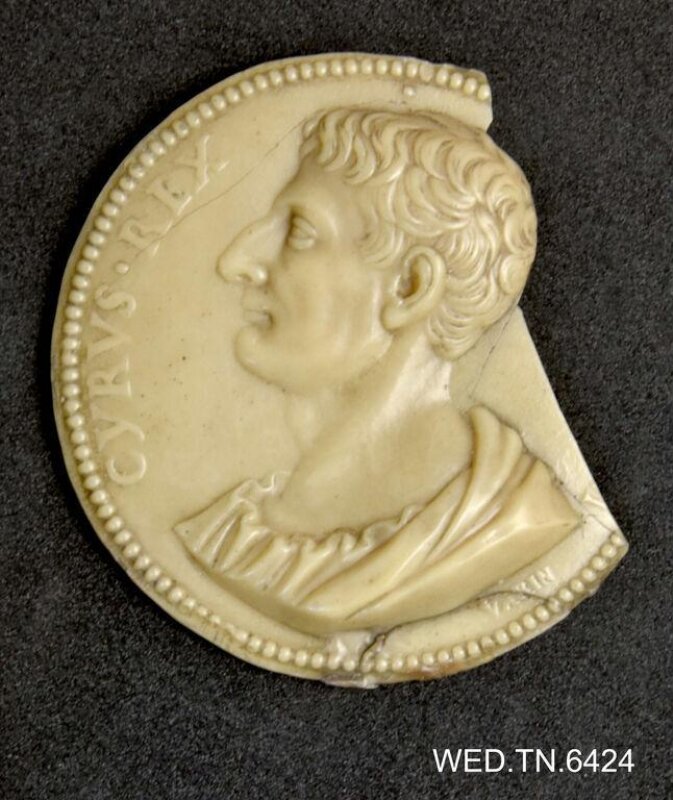
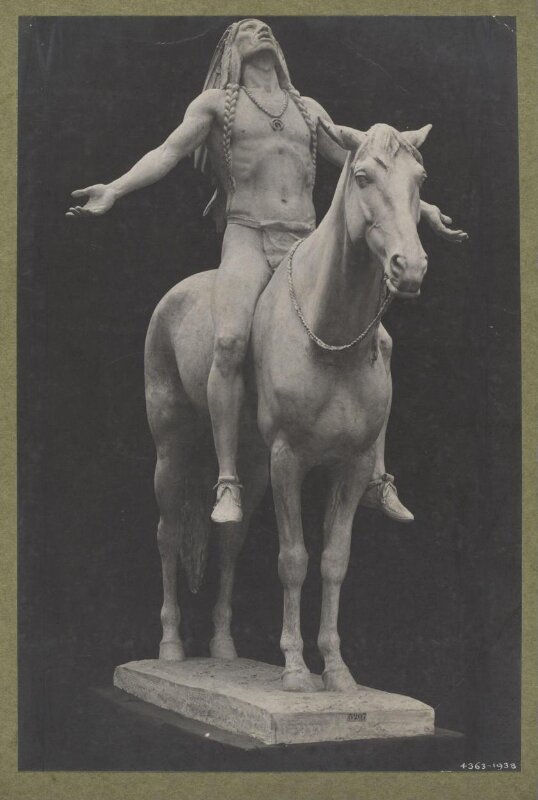
Cyrus Hall McCormick and the reaper (IA cyrushallmccormi00thwarich)
Thwaites, Reuben Gold, 1853-1913 State Historical Society of Wisconsin
The conquest of the Southwest - the story of a great spoliation - illustrated (IA cu31924028802548)
Brady, Cyrus Townsend, 1861-1920 Betts, Louis, ill D. Appleton and Company. pbl
talking to the fingers with the language of the eye
f the sense of touch as a workable strategy for sightless reading. The Haüy system's main drawback, in the opinion of at least one author, was that it was "talking to the fingers with the language...
More from the Ancient


Explore what happened on the days that shaped Cyrus the Great's life. Today In History connects historical figures with the events, births, and deaths that defined their era. Browse all historical figures or explore today's events.