Noriega Indicted: The Fall of Panama's Dictator
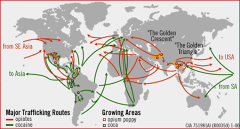
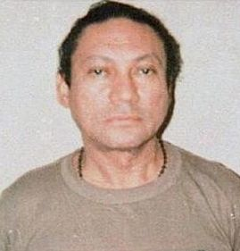
The United States indicted the dictator it had been paying for years. Federal grand juries in Miami and Tampa returned drug trafficking and money laundering charges against Panamanian strongman Manuel Noriega on February 5, 1988, marking the first time the American government had criminally charged a sitting foreign head of state. The indictments detailed a sprawling operation in which Noriega had transformed Panama into a transit hub for Colombian cocaine bound for the United States, allegedly earning $4.6 million in payoffs from the Medellin cartel. The awkwardness of the indictment was that Noriega had been on the CIA payroll since the 1960s. He had provided intelligence on leftist movements in Central America, facilitated covert arms deliveries to the Contras in Nicaragua, and allowed the United States to maintain extensive military operations in the Canal Zone. The relationship continued even as the Drug Enforcement Administration accumulated evidence of his narcotics connections. Multiple U.S. agencies had known about Noriega’s drug trafficking for years but considered him a useful asset in the Cold War struggle for influence in Latin America. The indictments came after Noriega’s former chief of staff, Colonel Roberto Diaz Herrera, publicly accused him of murder, election fraud, and drug dealing in June 1987, sparking massive street protests. The Reagan administration, facing Congressional pressure and unable to sustain the contradiction of funding a war on drugs while protecting a drug-trafficking ally, allowed the Justice Department to proceed. Noriega responded by cracking down on domestic opposition and declaring that the indictments were an act of American imperialism. The standoff escalated for nearly two years until December 1989, when President George H.W. Bush ordered the invasion of Panama. Operation Just Cause deployed 27,000 troops to remove Noriega, who surrendered in January 1990 after taking refuge in the Vatican embassy. He was convicted in Miami in 1992 and sentenced to forty years in prison, reduced on appeal to thirty.
February 5, 1988
38 years ago
Key Figures & Places
What Else Happened on February 5
The Roman Senate bestowed the title pater patriae upon Caesar Augustus, officially cementing his status as the father of his country. This honor transformed his…
An earthquake hit Pompeii seventeen years before Vesuvius buried it. The tremors knocked down temples, cracked aqueducts, and collapsed the forum. Intensity IX …
The earthquake hit Pompeii seventeen years before Vesuvius buried it. February 5, 62 AD. The forum collapsed. The Temple of Jupiter cracked open. Hundreds died …
An Lushan declared himself Emperor of China, shattering the stability of the Tang Dynasty and launching the brutal An Lushan Rebellion. This violent power grab …
An Lushan commanded 164,000 troops — nearly half the Tang Dynasty's entire army. The emperor had given him that power. Trusted him completely. An Lushan was a f…
Guy Foulques ascended to the papacy as Clement IV, inheriting a fractured Europe embroiled in the conflict between the Holy Roman Empire and the Angevin dynasty…
Talk to History
Have a conversation with historical figures who witnessed this era. Ask questions, explore perspectives, and bring history to life.