

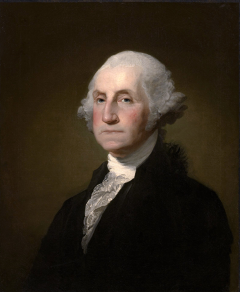
Washington Elected First President: Unanimous, No Contest
Washington accepted a $25,000 annual salary only after Congress urged him to do so, ensuring the presidency remained open to citizens without independent wealth rather than becoming the exclusive domain of the ultra-rich. His careful selection of the title "Mr. President" and his refusal to seek a third term cemented republican traditions that prevented the office from sliding into European-style monarchy while establishing the two-term limit still respected today.
February 4, 1789
237 years ago
Key Figures & Places
What Else Happened on February 4

Septimius Severus died in York, England, in 211 AD. His last words to his sons Caracalla and Geta: "Be harmonious, enrich the soldiers, and scorn all other men.…
Septimius Severus died at Eboracum while readying his legions for a final push against the Caledonians. His passing left the Roman Empire in the hands of his fe…
Yazid ibn Abi Sufyan commanded 3,000 cavalry against a Christian Arab garrison near Gaza. The defenders were Ghassanids — Arabs who'd fought for Byzantium for g…
Ludwig IV., das Kind wird in Forchheim zum König des Ostfrankenreichs gekrönt.

Zhao Kuangyin's troops got him drunk, dressed him in yellow robes while he slept, and declared him emperor when he woke up. He hadn't planned a coup. His office…
Zhao Kuangyin's troops staged a mutiny and draped a yellow robe over him while he slept. That was the story anyway. He'd been a general for the six-year-old emp…
Talk to History
Have a conversation with historical figures who witnessed this era. Ask questions, explore perspectives, and bring history to life.