

Luna 9 Lands on Moon: First Soft Landing Achieved
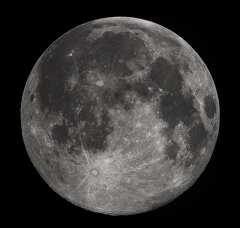
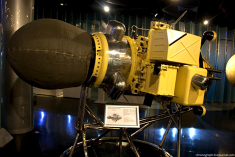
Nobody knew whether the Moon’s surface was solid ground or a deep layer of fine dust that would swallow any spacecraft whole. Luna 9 answered the question on February 3, 1966, when it became the first man-made object to achieve a soft landing on another celestial body. The Soviet probe touched down in the Oceanus Procellarum (Ocean of Storms) and immediately began transmitting photographs back to Earth, revealing a rocky, barren landscape that could support the weight of a lander. The Soviet lunar program had failed spectacularly and repeatedly to reach this point. Luna 9 was the twelfth Soviet attempt at a soft landing. Previous probes had crashed, lost contact, missed the Moon entirely, or had their retro-rockets fail during descent. The American Ranger program had achieved controlled impacts but never a gentle touchdown. Getting a spacecraft to decelerate from 6,000 miles per hour to near zero at exactly the right altitude required precision engineering that both superpowers had struggled to master. Luna 9 weighed about 220 pounds at landing after jettisoning its airbag-equipped capsule, which bounced to a stop and then opened four petal-like panels to right itself and deploy its camera. The panoramic images, transmitted over three sessions totaling eight hours and five minutes, showed rocks and small craters in sharp detail. Jodrell Bank Observatory in England intercepted the transmissions and decoded them before the Soviets released the images, using the same format as standard wire service photograph transmissions. The landing proved that the lunar surface could bear the weight of a spacecraft, removing one of the primary engineering uncertainties blocking human missions. NASA’s Surveyor 1 followed with its own successful soft landing four months later. Three years after Luna 9, Apollo 11 astronauts walked on the same kind of surface the Soviet probe had photographed first.
February 3, 1966
60 years ago
Key Figures & Places

What Else Happened on February 3
The Normans conquered Southern Italy because younger sons had nothing to inherit back home. Drogo of Hauteville was one of twelve brothers who left Normandy as …
Ramon Berenguer III of Barcelona married Douce I of Provence in 1112, and the wedding ceremony produced something far more consequential than an heir to either …
Cardinal Robert of Geneva ordered the massacre of over 2,000 residents of Cesena on February 3, 1377, earning himself the permanent title "Butcher of Cesena" an…
Sultan Mehmed II ascended the Ottoman throne, inheriting a fractured empire and a precarious geopolitical position. Two years later, he orchestrated the fall of…
Bartolomeu Dias sailed past the southern tip of Africa without even realizing it, blown so far off course by a ferocious storm in early 1488 that when he finall…
Portugal crushed a combined fleet of Ottoman, Mamluk, and Indian forces off the coast of Diu, securing a decisive naval victory. This triumph ended Muslim domin…
Talk to History
Have a conversation with historical figures who witnessed this era. Ask questions, explore perspectives, and bring history to life.