

Zimmermann Telegram Exposed: America Moves Toward War
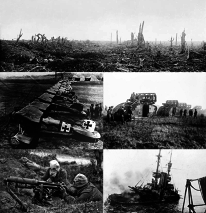
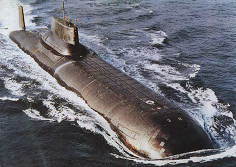
Germany made the calculation that sinking American ships was worth the risk. On February 1, 1917, Germany resumed unrestricted submarine warfare, declaring that any vessel in the waters around Britain, France, and Italy would be torpedoed without warning. Two days later, President Woodrow Wilson severed diplomatic relations with Germany, sending Ambassador Johann von Bernstorff home. The United States was two months from entering World War I. Wilson had spent three years keeping America neutral. When a German U-boat sank the Lusitania in May 1915, killing 1,198 passengers including 128 Americans, Wilson demanded Germany stop attacking passenger ships. Germany complied, and Wilson won reelection in 1916 on the slogan "He kept us out of war." But the German military high command, convinced that unrestricted submarine warfare could starve Britain into surrender within five months, persuaded Kaiser Wilhelm II to reverse course. The timing was catastrophic for Germany because British intelligence had already intercepted and decoded the Zimmermann Telegram, a secret communication from German Foreign Minister Arthur Zimmermann to the German ambassador in Mexico. The telegram proposed a military alliance: if Mexico joined Germany against the United States, Germany would help Mexico recover Texas, New Mexico, and Arizona. The British shared the decoded telegram with Washington in late February. When it was published on March 1, American public opinion lurched toward war. Wilson asked Congress for a declaration of war on April 2, 1917, framing the conflict as a crusade to "make the world safe for democracy." Congress voted overwhelmingly in favor four days later. The arrival of American troops and resources tipped the balance on the Western Front. Germany, which had gambled that its submarines could win the war before American soldiers crossed the Atlantic, lost that bet decisively.
February 3, 1917
109 years ago
Key Figures & Places


What Else Happened on February 3
The Normans conquered Southern Italy because younger sons had nothing to inherit back home. Drogo of Hauteville was one of twelve brothers who left Normandy as …
Ramon Berenguer III of Barcelona married Douce I of Provence in 1112, and the wedding ceremony produced something far more consequential than an heir to either …
Cardinal Robert of Geneva ordered the massacre of over 2,000 residents of Cesena on February 3, 1377, earning himself the permanent title "Butcher of Cesena" an…
Sultan Mehmed II ascended the Ottoman throne, inheriting a fractured empire and a precarious geopolitical position. Two years later, he orchestrated the fall of…
Bartolomeu Dias sailed past the southern tip of Africa without even realizing it, blown so far off course by a ferocious storm in early 1488 that when he finall…
Portugal crushed a combined fleet of Ottoman, Mamluk, and Indian forces off the coast of Diu, securing a decisive naval victory. This triumph ended Muslim domin…
Talk to History
Have a conversation with historical figures who witnessed this era. Ask questions, explore perspectives, and bring history to life.