Sixteenth Amendment Ratified: Income Tax Becomes Law
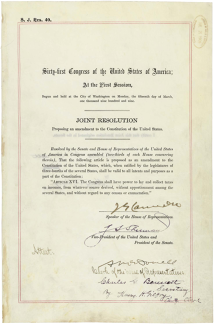
The federal income tax, ratified on February 3, 1913, began as a modest levy on the wealthy and became the financial engine of modern American government. The Sixteenth Amendment granted Congress the power to tax income "from whatever source derived" without apportioning the tax among the states by population, overturning the Supreme Court’s 1895 ruling in Pollock v. Farmers’ Loan & Trust Co. that had struck down a previous income tax as unconstitutional. The push for an income tax had been building for two decades. The federal government in the late nineteenth century relied almost entirely on tariffs and excise taxes for revenue, a system that placed the heaviest burden on consumers of imported goods rather than on accumulated wealth. Populists and progressives argued that the industrial barons of the Gilded Age were paying a fraction of their fair share. An income tax passed in 1894 but the Supreme Court killed it the following year, ruling 5-4 that taxing income from property was a "direct tax" requiring apportionment. The amendment’s ratification required approval from thirty-six of the forty-eight states, a process that took nearly four years after Congress proposed it in 1909. Wyoming provided the final vote on February 3, 1913. The first tax code, enacted later that year under the Revenue Act of 1913, imposed a 1 percent tax on incomes above $3,000 (roughly $92,000 today) and a graduated surtax reaching 7 percent on incomes above $500,000. The rates would explode during wartime. The top marginal rate hit 77 percent during World War I and 94 percent during World War II. The income tax transformed the relationship between citizens and the federal government, funding two world wars, the New Deal, the Interstate Highway System, and the modern welfare state. No single amendment has done more to reshape what the federal government can afford to do.
February 3, 1913
113 years ago
Key Figures & Places
What Else Happened on February 3
The Normans conquered Southern Italy because younger sons had nothing to inherit back home. Drogo of Hauteville was one of twelve brothers who left Normandy as …
Ramon Berenguer III of Barcelona married Douce I of Provence in 1112, and the wedding ceremony produced something far more consequential than an heir to either …
Cardinal Robert of Geneva ordered the massacre of over 2,000 residents of Cesena on February 3, 1377, earning himself the permanent title "Butcher of Cesena" an…
Sultan Mehmed II ascended the Ottoman throne, inheriting a fractured empire and a precarious geopolitical position. Two years later, he orchestrated the fall of…
Bartolomeu Dias sailed past the southern tip of Africa without even realizing it, blown so far off course by a ferocious storm in early 1488 that when he finall…
Portugal crushed a combined fleet of Ottoman, Mamluk, and Indian forces off the coast of Diu, securing a decisive naval victory. This triumph ended Muslim domin…
Talk to History
Have a conversation with historical figures who witnessed this era. Ask questions, explore perspectives, and bring history to life.