Hitler Takes Nazi Party: Path to Totalitarianism
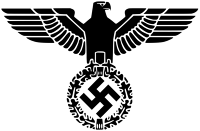
Adolf Hitler became chairman of the National Socialist German Workers' Party on July 29, 1921, seizing absolute control of a fringe political movement that he would transform into the most destructive force in modern history. He was thirty-two years old, a failed artist and decorated war veteran with no formal political training and an extraordinary talent for manipulating crowds. Hitler had joined the German Workers' Party in September 1919 as its fifty-fifth member, assigned by the army to infiltrate what it considered a potentially subversive group. Instead, he discovered his gift for public speaking and quickly became the party's main attraction. His beer-hall speeches, delivered with increasing theatrical intensity, drew crowds by channeling the rage of Germans humiliated by defeat in World War I, crushed by hyperinflation, and searching for someone to blame. By mid-1921, Hitler demanded total authority over the party as the price for remaining. When party leaders hesitated, he threatened to quit, knowing his departure would collapse membership and funding. The committee capitulated, granting him the title of chairman with dictatorial powers over party operations. He replaced the collective leadership structure with the Fuehrerprinzip, the "leader principle," making his word the party's supreme law. Hitler immediately reshaped the organization into something unprecedented in German politics. He established the Sturmabteilung, the brown-shirted storm troopers, as a paramilitary force to protect party meetings and intimidate opponents. He adopted the swastika as the party symbol and the stiff-armed salute as its greeting. He crafted a mythology around himself as Germany's destined savior, surrounded by symbols, rituals, and pageantry borrowed from religious and military traditions. Twelve years separated this obscure party vote from Hitler's appointment as Chancellor of Germany in January 1933. Every element of the totalitarian state he built was already visible in embryo on the day he seized control of a small Munich political club.
July 29, 1921
105 years ago
Key Figures & Places
What Else Happened on July 29
Nebuchadnezzar II’s forces breached the walls of Jerusalem, systematically dismantling the First Temple and deporting the city’s elite to Babylon. This destruct…
The Praetorian Guard broke into the palace and found two emperors arguing. Pupienus and Balbinus had ruled Rome together for 99 days, spending most of it feudin…
Twelve years old and they handed him a collapsing kingdom. K'inich Janaab Pakal became ajaw of Palenque on July 29, 615, after enemies had sacked the city and k…
Twenty-two thousand residents of Thessaloniki were chained together and marched to slave markets across the Caliphate—the largest single human haul from a Byzan…
King Rudolph II and Margrave Adalbert I of Ivrea crushed the forces of dethroned Emperor Berengar I at Firenzuola in Tuscany, ending his last viable bid to recl…
Emperor Basil II annihilated the Bulgarian army at the Battle of Kleidion, then ordered the blinding of 15,000 prisoners, leaving one eye to every hundredth man…
Talk to History
Have a conversation with historical figures who witnessed this era. Ask questions, explore perspectives, and bring history to life.