Panama Seizes Canal: End of American Control
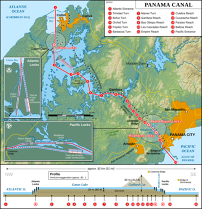
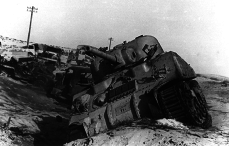
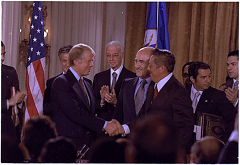
At noon on December 31, 1999, the Republic of Panama assumed full control of the Panama Canal, ending 85 years of American sovereignty over a ten-mile-wide strip of territory that bisected the nation and over the waterway that connected the Atlantic and Pacific Oceans. Panamanian President Mireya Moscoso accepted the keys to the canal administration building at Balboa Heights in a ceremony notably absent of senior American officials. Neither President Clinton nor any member of his cabinet attended, a diplomatic slight that underscored the lingering sensitivity of the transfer in Washington. The canal had been American from its violent inception. In 1903, the U.S. backed Panamanian independence from Colombia and immediately signed a treaty granting permanent control of the Canal Zone. Construction cost $375 million and 5,600 lives, mostly from disease. The canal opened August 15, 1914, cutting the New York-to-San Francisco maritime journey from 13,000 miles to 5,000. Panamanian resentment of the American enclave grew steadily through the twentieth century. The Canal Zone operated as a de facto American colony, with its own police, courts, schools, and commissaries. Panamanians who worked in the Zone were paid less than American employees for identical work. Tensions exploded on January 9, 1964, Martyrs Day, when Panamanian students attempting to fly their flag alongside the American flag at a Canal Zone high school were attacked by American residents and soldiers. Twenty-one Panamanians and four Americans were killed in the ensuing riots. The Torrijos-Carter Treaties of 1977 established the transfer timeline. The handover was deeply controversial; Ronald Reagan had campaigned against it with "We built it, we paid for it, it ours." The canal has thrived under Panamanian management. A $5.25 billion expansion in 2016 doubled capacity, and annual revenues exceed $4 billion.
December 31, 1999
27 years ago
Key Figures & Places

What Else Happened on December 31
A coalition of Vandals, Alans, and Suebians shattered the frozen Rhine, surging into Gaul to dismantle Roman authority in the West. This breach proved irreversi…
Belisarius took Syracuse without a siege. The Ostrogothic garrison saw his fleet, counted the soldiers, and simply surrendered the keys. He'd conquered the enti…
Vikings crash into Berkshire's forces at Englefield, only to stumble back toward Reading after Æthelwulf's men slaughter many Danes. This sharp defeat buys Wess…
Henry IV surrendered his crown at Ingelheim after his own son, Henry V, led a successful rebellion against him. This forced abdication ended the elder Henry’s d…
The boy emperor Tran Thai Tong took the Vietnamese throne through marriage to the last Ly monarch, ending 216 years of Ly Dynasty rule. The new Tran Dynasty wou…
The Muslim defenders had held out for three months behind Palma's walls. When they finally opened the gates on December 31, James I rode in with 16,000 men — ne…
Talk to History
Have a conversation with historical figures who witnessed this era. Ask questions, explore perspectives, and bring history to life.