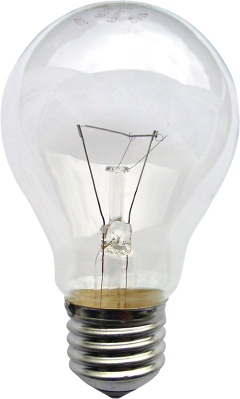
Edison Lights the World: Incandescent Light Debuts
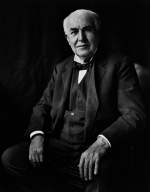
Thomas Edison invited reporters, investors, and the merely curious to his Menlo Park, New Jersey, laboratory on New Year Eve 1879 and showed them the future: a small glass bulb containing a carbonized bamboo filament that glowed steadily for hours without burning out. The demonstration was not the moment of invention, as Edison had been refining his incandescent lamp for over a year, but it was the moment of persuasion, the public proof that electric light was practical, reliable, and ready to replace gas. Edison had not invented the electric light. At least twenty-two other inventors had produced working incandescent lamps before him, including Humphry Davy, Warren de la Rue, and Joseph Swan in England. What Edison achieved was something more commercially decisive: a lamp that burned long enough to be economical, connected to a complete electrical distribution system designed to deliver power from a central generating station to dozens of customers simultaneously. He was not building a light bulb; he was building an industry. The Menlo Park demonstration featured Edison entire system in miniature. Thirty lamps lit the laboratory, the surrounding streets, and several nearby buildings, all powered by a dynamo-driven generator. Visitors could turn individual lamps on and off without affecting the others, a feature of the parallel circuit design that distinguished Edison system from the series circuits used by arc lighting. The New York Herald devoted its entire front page to the demonstration, and Edison stock in the Edison Electric Light Company soared. Edison opened the Pearl Street Station in lower Manhattan in September 1882, powering 400 lamps for 85 customers. Within a decade, hundreds of central stations operated across America and Europe. The incandescent bulb was finally superseded by LED technology, but the distribution model Edison demonstrated that New Year Eve remains the foundation of how the world receives its power.
December 31, 1879
147 years ago
Key Figures & Places
What Else Happened on December 31
A coalition of Vandals, Alans, and Suebians shattered the frozen Rhine, surging into Gaul to dismantle Roman authority in the West. This breach proved irreversi…
Belisarius took Syracuse without a siege. The Ostrogothic garrison saw his fleet, counted the soldiers, and simply surrendered the keys. He'd conquered the enti…
Vikings crash into Berkshire's forces at Englefield, only to stumble back toward Reading after Æthelwulf's men slaughter many Danes. This sharp defeat buys Wess…
Henry IV surrendered his crown at Ingelheim after his own son, Henry V, led a successful rebellion against him. This forced abdication ended the elder Henry’s d…
The boy emperor Tran Thai Tong took the Vietnamese throne through marriage to the last Ly monarch, ending 216 years of Ly Dynasty rule. The new Tran Dynasty wou…
The Muslim defenders had held out for three months behind Palma's walls. When they finally opened the gates on December 31, James I rode in with 16,000 men — ne…
Talk to History
Have a conversation with historical figures who witnessed this era. Ask questions, explore perspectives, and bring history to life.