
Soviet Union Forged: Communism Unites the Republics
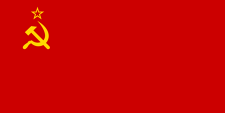
Delegates from the Russian, Ukrainian, Byelorussian, and Transcaucasian Soviet republics gathered in the Bolshoi Theatre in Moscow on December 30, 1922, and voted to ratify the Treaty on the Creation of the Union of Soviet Socialist Republics, establishing the state that would dominate global politics for the next seven decades. Vladimir Lenin, the architect of the Bolshevik revolution, was too ill to attend. He was at his dacha in Gorki, partially paralyzed from a series of strokes, dictating increasingly alarmed memoranda warning that the union was being constructed on terms that would enable authoritarian abuse. Lenin envisioned a voluntary federation of equals, but Stalin, then Commissar of Nationalities, pushed for a structure subordinating the other republics to Russia. The compromise granted each republic the right to secede on paper, but the Party centralized all power in Moscow. Georgia, which had been forcibly incorporated into the Transcaucasian Federation by the Red Army in 1921, was particularly resistant. Lenin, upon learning that Stalin envoy Sergo Ordzhonikidze had physically struck a Georgian Bolshevik during negotiations, was furious and began drafting what became known as his "Testament," which recommended Stalin removal from power. The new state controlled one-sixth of the Earth land surface and encompassed more than a hundred nationalities speaking dozens of languages. The founding treaty established Moscow as the capital and declared the union open to any socialist republic worldwide. The Soviet flag bore no national emblems, only the universal hammer and sickle. Lenin died on January 21, 1924, before he could act on his warnings. Within five years, Stalin had eliminated all rivals and built the totalitarian system Lenin feared. The Soviet Union survived sixty-nine years before collapsing on Christmas Day 1991. The right to secede, dismissed as decorative for decades, was the legal mechanism the republics ultimately used to dissolve it.
December 30, 1922
104 years ago
Key Figures & Places
What Else Happened on December 30
The first edition lasted exactly one year. Justinian scrapped it completely—too many contradictions, too many loopholes left by a thousand years of Roman law st…
King Brian Boru shatters the allied armies of Leinster and Dublin at Glenmama, ending their resistance to his rule. This crushing victory secures Munster's domi…
Joseph ibn Naghrela wasn't just any vizier — he was the most powerful Jew in Muslim Spain, commanding armies and collecting taxes for Granada's Berber king. Tha…
The English fleet arrived at La Rochelle expecting an easy siege. Instead, they found Castilian warships waiting — their cogs bristling with new gunpowder weapo…
Richard of York rode into a trap with 8,000 men. The Lancastrians had 18,000 waiting outside Wakefield. His teenage son Edmund tried to flee the battlefield — t…
Lancastrian forces crushed the Yorkist army at the Battle of Wakefield, killing Richard, 3rd Duke of York, on the field. This defeat decapitated the Yorkist lea…
Talk to History
Have a conversation with historical figures who witnessed this era. Ask questions, explore perspectives, and bring history to life.