

Darwin Sails on the Beagle: The Voyage That Explains Life
Charles Darwin steps onto the HMS Beagle in 1831, launching a five-year voyage that forces him to confront nature's brutal variety across the globe. This expedition directly yields the observations needed to construct his theory of natural selection, fundamentally upending humanity's understanding of its own origins.
December 27, 1831
195 years ago
Key Figures & Places
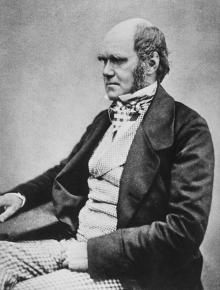
Charles Darwin
Wikipedia
evolution
Wikipedia
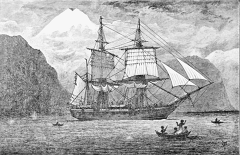
HMS Beagle
Wikipedia

Charles Darwin
Wikipedia

Second voyage of HMS Beagle
Wikipedia

HMS Beagle
Wikipedia

Evolution
Wikipedia

England
Wikipedia

Darwinismo
Wikipedia

Portugal
Wikipedia

Methuen Treaty
Wikipedia

Robert FitzRoy
Wikipedia

Geschichte Englands
Wikipedia

Textile
Wikipedia
History of Portugal
Wikipedia

Wine
Wikipedia

South America
Wikipedia

Galápagos Islands
Wikipedia
What Else Happened on December 27
Ein Teil des römischen Klerus wählt Eulalius als Nachfolger des am Vortag verstorbenen Zosimus zum Papst. Da der am folgenden Tag ebenfalls gewählte Bonifatius …
Emperor Justinian I unveiled the Hagia Sophia in Constantinople, showcasing a massive dome that defied the architectural limitations of the sixth century. By ut…
The first Hagia Sophia burned down in 404. The second one — bigger, grander — fell to rioters in 532 during the Nika riots that nearly toppled Emperor Justinian…
prédication de la deuxième croisade, à Spire, par Saint Bernard de Clairvaux, devant l'empereur Conrad III.
Saint Dominique et Diego d'Osma fondent le monastère féminin de Prouilhe (qui ne deviendra monastère double que l’année suivante), à l’origine du développement …
Der flämische Forschungsreisende Wilhelm von Rubruk erreicht die mongolische Hauptstadt Karakorum, wo er sich mit seinen Begleitern mehrere Monate am Hof des Gr…
Talk to History
Have a conversation with historical figures who witnessed this era. Ask questions, explore perspectives, and bring history to life.