Curie Isolates Radium: Unlocking Radioactivity's Power
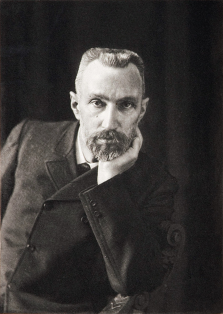
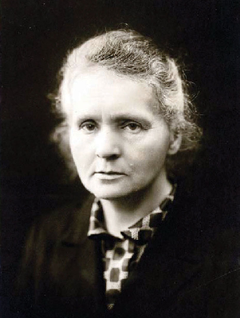
Marie and Pierre Curie announced the discovery of radium to the French Academy of Sciences on December 26, 1898, identifying a new element that was two million times more radioactive than uranium and that would reshape physics, medicine, and the twentieth century understanding of matter itself. The discovery culminated months of backbreaking labor in a converted shed at the Ecole de Physique et de Chimie in Paris, where the couple worked without proper ventilation, protective equipment, or institutional support. Marie Curie had chosen uranium rays as her doctoral subject partly because no one else wanted it. She quickly discovered that pitchblende emitted far more radiation than its uranium content could explain, leading her to hypothesize an unknown element was responsible. Pierre abandoned his own research to join her in isolating the source. The Curies processed tons of pitchblende residue obtained from Joachimsthal mines in Bohemia, using a tedious method of chemical fractionation to concentrate the radioactive component. They had already announced the discovery of polonium, named for Marie native Poland, in July 1898. Radium proved far more difficult to isolate. The December announcement was based on spectroscopic evidence; it took Marie four more years of processing eight tons of pitchblende to obtain one-tenth of a gram of pure radium chloride. The discovery earned the Curies a shared Nobel Prize in Physics in 1903, alongside Henri Becquerel. Marie received a second Nobel Prize in Chemistry in 1911 for her work isolating pure radium, becoming the first person to win Nobel Prizes in two different sciences. Radium transformed cancer treatment through radiation therapy and advanced the understanding of atomic structure that led to nuclear energy and nuclear weapons. Marie Curie died in 1934 from aplastic anemia caused by decades of radiation exposure; her laboratory notebooks remain so contaminated that they are stored in lead-lined boxes.
December 26, 1898
128 years ago
Key Figures & Places
What Else Happened on December 26
A Roman priest nobody expected. Leo III won the papal election while his predecessor wasn't even cold in the ground — chosen by popular acclaim, not the usual p…
Berengar I seized the Iron Crown of Lombardy at Pavia, securing his rule over Italy through a decisive election by Lombard lords. This coronation solidified his…
Stephen seized the throne while his cousin Matilda was still abroad. He rushed to Winchester, grabbed the royal treasury, and convinced the Archbishop of Canter…
Holland’s forces crushed the Utrecht army at the Battle of Westbroek, ending the Bishopric of Utrecht’s military threat to the County of Holland. This victory c…
David of Burgundy's army of 4,000 to 5,000 soldiers crushed the armed mob from Utrecht on December 26, 1481, ending their attempt to avenge the Westbroek massac…
Robert Carr and Frances Howard wed in a lavish court ceremony, finalizing a scandalous union that had required the annulment of Howard’s previous marriage. John…
Talk to History
Have a conversation with historical figures who witnessed this era. Ask questions, explore perspectives, and bring history to life.