

Decembrist Revolt: Russian Officers Rise Against the Tsar
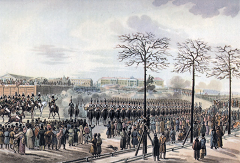
Roughly 3,000 soldiers led by liberal officers assembled on Senate Square in St. Petersburg, refusing to swear allegiance to the new Tsar Nicholas I and demanding a constitution. Loyalist artillery dispersed the rebels within hours, and Nicholas sentenced five ringleaders to death, but the Decembrists' ideals inspired every subsequent Russian radical movement for the next century.
December 26, 1825
201 years ago
Key Figures & Places

What Else Happened on December 26
A Roman priest nobody expected. Leo III won the papal election while his predecessor wasn't even cold in the ground — chosen by popular acclaim, not the usual p…
Eine Sturmflut an der Nordseeküste verursacht in Friesland etwa 2500 Tote, die Leybucht entsteht.
una gran parte del noroeste de los Países Bajos es inundada por una tormenta. El obispo Prudencio de Troyes describió esta inundación, y afirmó que murieron al …
Berengar I seized the Iron Crown of Lombardy at Pavia, securing his rule over Italy through a decisive election by Lombard lords. This coronation solidified his…
Adalbert I. von Saarbrücken wird Erzbischof von Mainz.
Stephen seized the throne while his cousin Matilda was still abroad. He rushed to Winchester, grabbed the royal treasury, and convinced the Archbishop of Canter…
Talk to History
Have a conversation with historical figures who witnessed this era. Ask questions, explore perspectives, and bring history to life.