

Christmas Truce 1914: Enemies Lay Down Arms
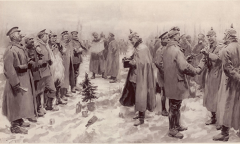
German soldiers placed candles on small Christmas trees along the parapet of their trenches on the evening of December 24, 1914, and began singing "Stille Nacht." Across no-man land, British soldiers heard the singing, saw the flickering lights, and after a cautious silence, began singing back. By Christmas morning, unarmed soldiers from both sides climbed out of their trenches and met in the cratered wasteland between the lines for one of the most extraordinary events of the First World War. The informal truces occurred at multiple points along the Western Front, primarily in the sectors held by British and German forces in Flanders and northern France. Soldiers exchanged cigarettes, chocolate, buttons, and cap badges. Several accounts describe impromptu football matches, though the details vary and some historians consider the football stories embellished. What is beyond dispute is that men who had been trying to kill each other days earlier shook hands, shared photographs of their families, and helped each other bury the dead who had been lying in no-man land since the fighting began. The truces were not universal. French and Belgian sectors saw fewer cease-fires, partly because German forces occupied their national territory, making fraternization feel like collaboration. In some sectors, officers who tried to prevent the truce were ignored; in others, snipers continued firing throughout. The truces lasted from a few hours to several days, with some sectors maintaining informal agreements not to fire until after New Year. Military commanders on both sides were alarmed. The British high command issued explicit orders forbidding any repetition, and in subsequent years, artillery bombardments were deliberately scheduled for Christmas Eve to prevent fraternization. The 1914 Christmas Truce endures as a reminder that men in the trenches often had more in common with the enemy across the wire than with the generals who sent them there.
December 25, 1914
112 years ago
Key Figures & Places


What Else Happened on December 25
Wu Han's forces crush the separatist Chengjia empire, ending its rebellion and restoring imperial unity under Emperor Guangwu. This decisive victory solidifies …
Emperor Aurelian dedicated a grand temple to Sol Invictus in Rome, formalizing the sun god as the supreme deity of the Roman Empire. By elevating this solar cul…
Aurelian built his temple to the Unconquered Sun on December 25th for a reason. Rome had fractured into three empires, barbarians pushed at every border, and si…
Constantine had three sons. He'd already made two of them Caesars — power-sharing emperors-in-waiting. Now his youngest, Constans, just seven years old, got the…
Rome, 336. Someone wrote it down. December 25. Christ's birth — now official enough to mark on a calendar, to gather for, to remember out loud. This wasn't the …
The Chronography of 354 records the first known Roman celebration of Jesus’s birth on December 25. This date eventually standardized the liturgical calendar acr…
Talk to History
Have a conversation with historical figures who witnessed this era. Ask questions, explore perspectives, and bring history to life.