Stalingrad Ends: Soviet Victory Turns WWII Tide
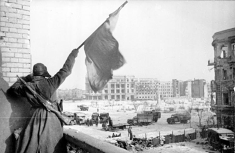
The German 6th Army, which had entered Stalingrad with 300,000 men, surrendered its last 91,000 starving survivors on February 2, 1943, ending the bloodiest battle in the history of warfare. Field Marshal Friedrich Paulus, promoted to that rank just one day earlier by Hitler, who expected him to commit suicide rather than capitulate, became the first German field marshal ever taken prisoner. The defeat shattered the myth of Wehrmacht invincibility and shifted the momentum of World War II permanently to the Allies. The German offensive to capture Stalingrad had begun in August 1942, driven by Hitler’s obsession with taking the city bearing Stalin’s name and controlling the Volga River supply line. The Luftwaffe reduced much of the city to rubble, but the ruins proved ideal defensive terrain. Soviet soldiers fought from building to building, floor to floor, sometimes room to room. Snipers became decisive weapons. The average life expectancy of a Soviet reinforcement arriving at the Stalingrad front was twenty-four hours. On November 19, 1942, the Red Army launched Operation Uranus, a massive pincer movement that smashed through the weak Romanian and Hungarian forces protecting the German flanks. Within four days, Soviet forces had encircled the entire 6th Army. Hitler ordered Paulus to hold his position and wait for relief. Goering promised the Luftwaffe could supply the trapped army by air, but deliveries never exceeded a fraction of the minimum 300 tons per day needed. A relief column under Field Marshal Erich von Manstein pushed to within 30 miles of the pocket in December but could get no closer. By January 1943, German soldiers were eating horses, rats, and their own boot leather. Temperatures dropped to minus 30 degrees Celsius. Nearly two million soldiers and civilians died in the five-month battle, making it the deadliest single engagement in human history.
February 2, 1943
83 years ago
Key Figures & Places
What Else Happened on February 2
Alaric II published a law code in 506 that wasn't for his own people. The Visigoths had their own customs. But they ruled over millions of Romans in southern Ga…
Rodrigo of Castile marched to the Morcuera gorge near Miranda de Ebro with combined Christian forces. He was counting on the terrain — narrow passes, defensible…
Louis III rode into Saxony with the Frankish army in 880. He was 18. The Norse Great Heathen Army had been raiding the region for months, and Louis wanted them …
Otto I rescued Pope John XII from a hostile Roman aristocratic faction, then showed up in Rome expecting payment for the favor. The pope crowned him Holy Roman …
Conrad II secured the crown of Burgundy after the death of his childless uncle, King Rudolf III. By absorbing this kingdom into the Holy Roman Empire, he gained…
King Stephen walked into Lincoln Castle to settle a property dispute. He walked out in chains. His own cousin, Matilda, had trapped him there with a surprise ar…
Talk to History
Have a conversation with historical figures who witnessed this era. Ask questions, explore perspectives, and bring history to life.