

Seven Warlords Hanged: Post-War Justice in Japan
Seven men were hanged at Sugamo Prison in Tokyo just after midnight on December 23, 1948, in the culmination of the International Military Tribunal for the Far East, the Pacific theater equivalent of the Nuremberg Trials. Among those executed were former Prime Minister Hideki Tojo, who had authorized the attack on Pearl Harbor, and General Kenji Doihara, the intelligence mastermind behind Japan puppet state in Manchuria. The Tokyo tribunal had convened in April 1946 under the authority of General Douglas MacArthur, Supreme Commander of the Allied Powers occupying Japan. Twenty-eight Class A war criminals were indicted on charges including waging aggressive war, murder, and crimes against humanity. The prosecution presented evidence of the Nanjing Massacre, the Bataan Death March, systematic use of forced labor, and the biological warfare experiments conducted by Unit 731, though the latter were largely suppressed in exchange for the data being shared with American researchers. The trial lasted over two years and produced a 48,412-page transcript, making it the longest criminal proceeding in history at that time. All twenty-five defendants who survived to verdict were found guilty. Seven received death sentences, sixteen received life imprisonment, and two received lesser terms. The Indian judge Radhabinod Pal issued a famous dissent, arguing that the tribunal represented victor justice and that the atomic bombings of Hiroshima and Nagasaki constituted comparable crimes. The executions were conducted in deliberate secrecy to prevent the creation of martyrs. The date was chosen because it was the birthday of Crown Prince Akihito, a detail many Japanese interpreted as a calculated humiliation. Unlike Nuremberg, which established legal precedents widely accepted in international law, the Tokyo tribunal remains deeply contested in Japan, where the Yasukuni Shrine continues to honor several of the convicted men among its enshrined war dead.
December 23, 1948
78 years ago
Key Figures & Places
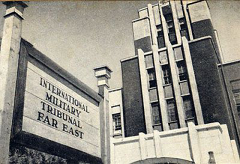
International Military Tribunal for the Far East
Wikipedia
Tokyo
Wikipedia
Empire of Japan
Wikipedia
Sugamo Prison
Wikipedia

Japan
Wikipedia

International Military Tribunal for the Far East
Wikipedia

Sugamo Prison
Wikipedia

The Emperor's Birthday
Wikipedia

Akihito
Wikipedia

Hong Kong
Wikipedia

إيري كامي
Wikipedia
What Else Happened on December 23
Huneric spent years hunting Catholics across North Africa — burning churches, exiling bishops, confiscating estates. Then he died. His nephew Gunthamund took th…
King Gunthamund ended the systematic persecution of Nicene Christians, reversing the harsh policies of his predecessor, Huneric. By restoring confiscated church…
Chlothar spent 47 years carving up his father's kingdom with his brothers — three civil wars, two murdered nephews, and a burned church full of peasants who bac…
The dome fell in 558 — not from one quake, but aftershocks that kept coming, until 20,000 square feet of Justinian's ceiling crashed down mid-service. No one di…
Yohl Ik'nal took power in Palenque when no male heir existed. She ruled for 20 years — a woman sovereign in a civilization that typically reserved kingship for …
King Dagobert II rode into the Woëvre forest near Stenay on December 23. Someone drove a lance through his eye while he rested under a tree. His own men, most l…
Talk to History
Have a conversation with historical figures who witnessed this era. Ask questions, explore perspectives, and bring history to life.