The Transistor Emerges: Revolutionizing Electronics
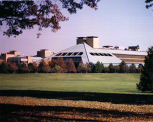
A tiny germanium crystal with two gold contacts pressed against its surface changed the trajectory of human civilization on December 23, 1947, when physicists John Bardeen and Walter Brattain demonstrated the first working transistor to executives at Bell Laboratories in Murray Hill, New Jersey. The device amplified an electrical signal by a factor of one hundred, replacing the fragile, power-hungry vacuum tube that had dominated electronics for four decades. Bell Labs had been hunting for a solid-state amplifier since before World War II. The telephone network depended on vacuum tube repeaters to boost signals across long distances, but the tubes burned out frequently, consumed enormous amounts of electricity, and generated so much heat that entire floors of telephone switching buildings required industrial cooling. William Shockley, who led the semiconductor research group, had theorized that a solid-state device could do the same job in a fraction of the space with almost no heat or power consumption. Bardeen and Brattain achieved the breakthrough by exploiting quantum mechanical effects at the surface of a germanium semiconductor. Their point-contact transistor was crude by later standards, but it proved the principle. Shockley, frustrated that his subordinates had beaten him to the discovery, locked himself in a hotel room for weeks and emerged with the design for the junction transistor, a more practical and manufacturable version that became the basis for the electronics industry. Bell Labs announced the invention publicly in June 1948, and the three physicists shared the 1956 Nobel Prize in Physics. The transistor enabled everything that followed: portable radios in the 1950s, integrated circuits in the 1960s, microprocessors in the 1970s, and the digital revolution that now produces over two trillion transistors per second globally. No single device has done more to reshape daily human existence since the printing press.
December 23, 1947
79 years ago
Key Figures & Places

What Else Happened on December 23
Huneric spent years hunting Catholics across North Africa — burning churches, exiling bishops, confiscating estates. Then he died. His nephew Gunthamund took th…
King Gunthamund ended the systematic persecution of Nicene Christians, reversing the harsh policies of his predecessor, Huneric. By restoring confiscated church…
Chlothar spent 47 years carving up his father's kingdom with his brothers — three civil wars, two murdered nephews, and a burned church full of peasants who bac…
The dome fell in 558 — not from one quake, but aftershocks that kept coming, until 20,000 square feet of Justinian's ceiling crashed down mid-service. No one di…
Yohl Ik'nal took power in Palenque when no male heir existed. She ruled for 20 years — a woman sovereign in a civilization that typically reserved kingship for …
King Dagobert II rode into the Woëvre forest near Stenay on December 23. Someone drove a lance through his eye while he rested under a tree. His own men, most l…
Talk to History
Have a conversation with historical figures who witnessed this era. Ask questions, explore perspectives, and bring history to life.