

Federal Reserve Act Signed: America's Central Bank Born
President Woodrow Wilson signed the Federal Reserve Act into law on December 23, 1913, just two days before Christmas, creating the central banking system that would become the most powerful financial institution on Earth. The signing ended a century-long political war over whether the United States should have a central bank at all, a question that had divided Americans since Andrew Jackson killed the Second Bank of the United States in 1836. The immediate catalyst was the Panic of 1907, when a cascade of bank failures nearly collapsed the American financial system. J.P. Morgan personally organized a private bailout, summoning bankers to his library and refusing to let them leave until they pledged their own money to stop the crisis. The spectacle of a single private citizen holding the nation economy hostage convinced even skeptics that some form of institutional backstop was necessary. A secret meeting of six influential bankers and one senator at a hunting club on Jekyll Island, Georgia, in November 1910 produced the initial framework. The plan went through years of contentious revision in Congress, with populists demanding public control and Wall Street demanding banker control. The final compromise created twelve regional Federal Reserve Banks overseen by a presidentially appointed Board of Governors in Washington, threading the needle between centralized authority and distributed power. The Federal Reserve ability to expand and contract the money supply, set interest rates, and serve as lender of last resort fundamentally altered the American economy. The system failed catastrophically during the Great Depression when it tightened credit instead of loosening it, a mistake that deepened the downturn by years. Reforms after that disaster and again after the 2008 financial crisis expanded the Fed powers to the point where its chair is often described as the second most powerful person in the United States.
December 23, 1913
113 years ago
Key Figures & Places
President of the United States
Wikipedia
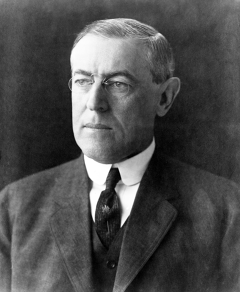
Woodrow Wilson
Wikipedia
Federal Reserve
Wikipedia
Federal Reserve Act
Wikipedia
Federal Reserve System
Wikipedia

Federal Reserve Act
Wikipedia
President
Wikipedia

Woodrow Wilson
Wikipedia

Federal Reserve
Wikipedia

Gerald Ford
Wikipedia

Metric Conversion Act
Wikipedia

Sistema métrico decimal
Wikipedia

United States
Wikipedia

United States Congress
Wikipedia
What Else Happened on December 23
Huneric spent years hunting Catholics across North Africa — burning churches, exiling bishops, confiscating estates. Then he died. His nephew Gunthamund took th…
King Gunthamund ended the systematic persecution of Nicene Christians, reversing the harsh policies of his predecessor, Huneric. By restoring confiscated church…
Chlothar spent 47 years carving up his father's kingdom with his brothers — three civil wars, two murdered nephews, and a burned church full of peasants who bac…
The dome fell in 558 — not from one quake, but aftershocks that kept coming, until 20,000 square feet of Justinian's ceiling crashed down mid-service. No one di…
Yohl Ik'nal took power in Palenque when no male heir existed. She ruled for 20 years — a woman sovereign in a civilization that typically reserved kingship for …
King Dagobert II rode into the Woëvre forest near Stenay on December 23. Someone drove a lance through his eye while he rested under a tree. His own men, most l…
Talk to History
Have a conversation with historical figures who witnessed this era. Ask questions, explore perspectives, and bring history to life.