

McAuliffe Answers German Demand: Nuts!
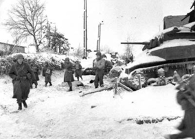
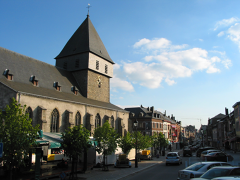
A one-word reply became the most celebrated act of American defiance in World War II. On December 22, 1944, Brigadier General Anthony McAuliffe received a formal German surrender demand at his command post in Bastogne, Belgium, read it, crumpled it up, and muttered "Nuts!" His staff officers, uncertain how to convey this to the enemy in proper military protocol, typed the single word as the official reply and handed it to the waiting German officers, who had to ask what it meant. Bastogne sat at the junction of seven major roads in the Belgian Ardennes, making it the most strategically valuable crossroads in Hitler last major offensive on the Western Front. The Battle of the Bulge had begun six days earlier when 250,000 German troops smashed through thinly held American lines in a surprise winter attack. The 101st Airborne Division, rushed to Bastogne by truck from a rest area in France, arrived just hours before German forces encircled the town, trapping 18,000 American soldiers in a pocket with dwindling ammunition, limited medical supplies, and no winter clothing. Fog and overcast skies had grounded Allied air support for days, leaving the garrison isolated. German artillery pounded the perimeter constantly, and several probing attacks nearly broke through the defensive line. The surrender demand warned McAuliffe that annihilation awaited if he refused. His response electrified American morale at a moment when the broader battle outcome remained uncertain and the Allied high command feared a repeat of the Dunkirk disaster. On December 26, General George Patton Third Army punched through the German encirclement from the south, relieving the besieged garrison. Bastogne held, and the German offensive stalled permanently. McAuliffe reply became shorthand for American stubbornness under pressure. The defense of Bastogne consumed German reserves that could not be replaced, accelerating the Western Front collapse within four months.
December 22, 1944
82 years ago
Key Figures & Places
United States
Wikipedia

Germany
Wikipedia
Nazi Germany
Wikipedia
Battle of the Bulge
Wikipedia

Belgium
Wikipedia
Bastogne
Wikipedia
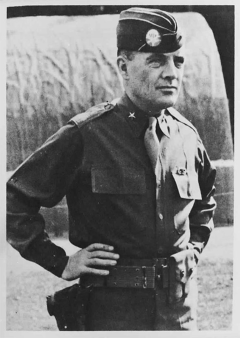
Anthony McAuliffe
Wikipedia

Battle of the Bulge
Wikipedia

Nazi Germany
Wikipedia

Bastogne
Wikipedia

Anthony McAuliffe
Wikipedia

Belgium
Wikipedia

World War II
Wikipedia

United States Army
Wikipedia

Mainland Southeast Asia
Wikipedia

Võ Nguyên Giáp
Wikipedia

Adolf Hitler
Wikipedia

V-2 rocket
Wikipedia

England
Wikipedia

Germans
Wikipedia

Manchester
Wikipedia

Finland
Wikipedia

France
Wikipedia

Guangzhou
Wikipedia

1901
Wikipedia

Pascal Bresson
Wikipedia
Scénario de bande dessinée
Wikipedia

illustrator
Wikipedia

Littérature d'enfance et de jeunesse
Wikipedia
Lúcia Miguel Pereira
Wikipedia

Vietnamese
Wikipedia
What Else Happened on December 22
Roman soldiers dragged Emperor Vitellius through the streets of Rome before executing him at the Gemonian stairs, ending his chaotic eight-month reign. His viol…
Vespasian's proclamation as emperor ended the chaotic Year of the Four Emperors, while the brutal execution of Vitellius on the Gemonian stairs signaled a decis…
Innocent I walked into the papal chair his father had just left. Anastasius I died in 401. His son took over the same year. No election drama. No debate. The Ro…
The ground beneath the Persian city of Damghan violently fractured, leveling the regional capital and claiming an estimated 200,000 lives. This catastrophe rema…
Huang Chao's rebel army walked into Luoyang without a fight. The eastern capital — home to half a million people, palaces that had stood for centuries — simply …
Stephen of Blois seizes the English throne just three weeks after King Henry I's death, sparking a civil war that fractures the kingdom for nearly two decades. …
Talk to History
Have a conversation with historical figures who witnessed this era. Ask questions, explore perspectives, and bring history to life.