Hitler Signs for V-2: The Rocket Age Begins
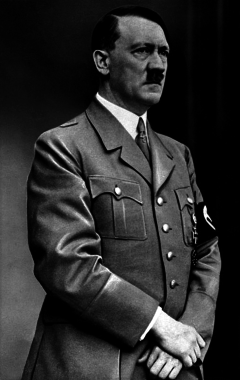
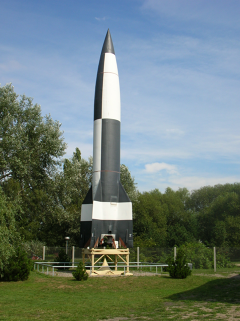
Adolf Hitler signed the order to develop the V-2 rocket as a weapon on December 22, 1942, authorizing the mass production of the world's first long-range guided ballistic missile. The decision transformed a research program at the Peenemunde Army Research Center on the Baltic coast into an industrial weapons project that would cost billions of Reichsmarks and thousands of lives. The V-2, designed by a team led by Wernher von Braun, was a liquid-fueled rocket that could deliver a one-ton warhead to a target 200 miles away at speeds exceeding 3,500 miles per hour. It traveled faster than sound, meaning its victims heard the explosion before they heard the rocket coming. There was no defense against it. The first V-2 was launched against Paris on September 8, 1944, and against London the same day. Over the next seven months, approximately 3,000 V-2s were fired, primarily at London and Antwerp. In London, V-2 strikes killed over 2,700 people. The worst single incident was a direct hit on a Woolworths store in New Cross on November 25, 1944, which killed 168. The rockets were built at the Mittelwerk underground factory in the Harz Mountains using slave labor from the Mittelbau-Dora concentration camp. An estimated 20,000 prisoners died during construction of the factory and production of the rockets, far more than the number of people killed by the rockets themselves. Conditions in the tunnels were among the worst in the entire camp system. After the war, the United States and the Soviet Union competed to capture V-2 technology and personnel. Operation Paperclip brought von Braun and over a hundred German rocket scientists to the United States, where they became the core of the American space program. Von Braun led the development of the Saturn V rocket that carried Apollo astronauts to the Moon. Soviet scientists used captured V-2s as the basis for the R-7, the rocket that launched Sputnik. The ballistic missile age that began with Hitler's 1942 order produced both the space race and the intercontinental nuclear weapons that defined the Cold War.
December 22, 1942
84 years ago
What Else Happened on December 22
Roman soldiers dragged Emperor Vitellius through the streets of Rome before executing him at the Gemonian stairs, ending his chaotic eight-month reign. His viol…
Vespasian's proclamation as emperor ended the chaotic Year of the Four Emperors, while the brutal execution of Vitellius on the Gemonian stairs signaled a decis…
Innocent I walked into the papal chair his father had just left. Anastasius I died in 401. His son took over the same year. No election drama. No debate. The Ro…
The ground beneath the Persian city of Damghan violently fractured, leveling the regional capital and claiming an estimated 200,000 lives. This catastrophe rema…
Huang Chao's rebel army walked into Luoyang without a fight. The eastern capital — home to half a million people, palaces that had stood for centuries — simply …
Stephen of Blois seizes the English throne just three weeks after King Henry I's death, sparking a civil war that fractures the kingdom for nearly two decades. …
Talk to History
Have a conversation with historical figures who witnessed this era. Ask questions, explore perspectives, and bring history to life.