Apollo 17 Ends Moon Era: Last Men Walk on Lunar Surface
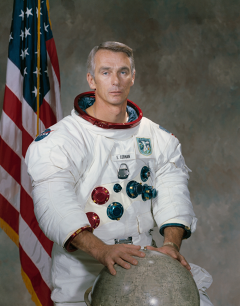
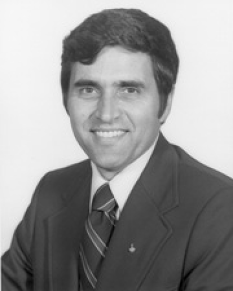
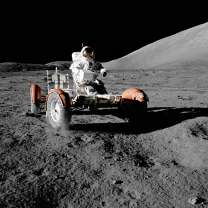
Eugene Cernan climbed the ladder of the lunar module for the last time, and no human has returned to the Moon since. On December 19, 1972, the Apollo 17 command module Amercia splashed down in the Pacific Ocean, ending the final crewed mission to the lunar surface and closing a chapter of exploration that had consumed a decade, $25 billion, and the efforts of 400,000 workers. Apollo 17 had launched on December 7 as the only nighttime launch of the Apollo program, its Saturn V rocket turning the Florida night into artificial daylight visible for hundreds of miles. Commander Cernan, lunar module pilot Harrison Schmitt, and command module pilot Ron Evans carried the heaviest scientific payload of any Apollo mission. Schmitt, a geologist, was the first and only trained scientist to walk on the Moon. Cernan and Schmitt spent over seventy-five hours on the lunar surface at the Taurus-Littrow valley, a site chosen for its geological diversity. They drove the Lunar Roving Vehicle for over twenty-two miles, collected 243 pounds of rock and soil samples, and deployed a suite of scientific instruments. Among their discoveries was orange soil near Shorty Crater, volcanic glass beads that provided evidence of ancient lunar volcanic activity billions of years old. Before climbing back into the lunar module Challenger for the last time, Cernan spoke into his radio: "As I take man's last step from the surface, back home for some time to come, I'd like to just say what I believe history will record, that America's challenge of today has forged man's destiny of tomorrow." The splashdown on December 19 was the final act of an era. Budget cuts had already canceled Apollos 18, 19, and 20. NASA pivoted to the Space Shuttle program and the Skylab space station. More than fifty years later, Cernan's footprints in the lunar dust remain undisturbed, the last human traces on another world.
December 19, 1972
54 years ago
Key Figures & Places
What Else Happened on December 19
Caracalla couldn't share power. His brother Geta arrived at their mother's apartments believing the family peace talks were real — he'd left his guards outside.…
Licinius didn't abdicate. He surrendered. Constantine's army had crushed his forces at Chrysopolis — 25,000 of Licinius's men dead in a single afternoon. His w…
Byzantine forces dragged Pope Martin I from Rome to Constantinople, where imperial judges subjected the pontiff to a sham trial for opposing Monothelitism. The …
Henry Plantagenet was 21 years old and already controlled more of France than the French king did. His coronation made him ruler of an empire stretching from Sc…
Nineteen cardinals locked themselves in the Lateran Palace for three days. When they finally emerged on December 19, 1187, they'd chosen Paolo Scolari—a Roman n…
Anne of Brittany was 13. Her duchy was Europe's last independent region between France and the Empire, and everyone wanted it. So her advisors married her to Ma…
Talk to History
Have a conversation with historical figures who witnessed this era. Ask questions, explore perspectives, and bring history to life.