Paine Ignites Revolution: The American Crisis Published
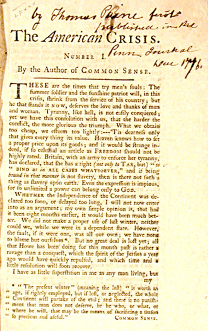
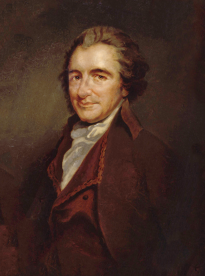
"These are the times that try men's souls." With those words, Thomas Paine rallied a revolution on the verge of collapse. On December 19, 1776, The Pennsylvania Journal published the first installment of The American Crisis, a pamphlet that reached George Washington's demoralized army days before its most desperate gamble at Trenton. The Continental Army was disintegrating. After defeats in New York that autumn, Washington had retreated across New Jersey with barely 3,000 troops, many barefoot and starving. British forces occupied much of New Jersey, and public support for independence was evaporating. Many Americans assumed the rebellion was finished. Paine, who had helped ignite the revolution with Common Sense in January 1776, composed The American Crisis during the retreat, reportedly writing by firelight on a drumhead. His language was direct and electric. "The summer soldier and the sunshine patriot will, in this crisis, shrink from the service of their country; but he that stands by it now, deserves the love and thanks of man and woman." The pamphlet attacked loyalists, mocked British overconfidence, and framed the struggle as a moral cause worth any sacrifice. Washington ordered it read aloud to his troops on December 23, two days before the crossing of the Delaware and the surprise attack on the Hessian garrison at Trenton. Whether Paine's words directly inspired the soldiers who climbed into boats on that freezing Christmas night is impossible to prove, but the timing was precise. The victory at Trenton, followed by Princeton, saved the revolution from extinction. Paine wrote fifteen more Crisis pamphlets over the next seven years, sustaining morale through the war's darkest stretches. The series ended in April 1783: "the times that tried men's souls are over." No other writer did more to keep the American cause alive through rhetoric alone.
December 19, 1776
250 years ago
Key Figures & Places
What Else Happened on December 19
Caracalla couldn't share power. His brother Geta arrived at their mother's apartments believing the family peace talks were real — he'd left his guards outside.…
Licinius didn't abdicate. He surrendered. Constantine's army had crushed his forces at Chrysopolis — 25,000 of Licinius's men dead in a single afternoon. His w…
Byzantine forces dragged Pope Martin I from Rome to Constantinople, where imperial judges subjected the pontiff to a sham trial for opposing Monothelitism. The …
Henry Plantagenet was 21 years old and already controlled more of France than the French king did. His coronation made him ruler of an empire stretching from Sc…
Nineteen cardinals locked themselves in the Lateran Palace for three days. When they finally emerged on December 19, 1187, they'd chosen Paolo Scolari—a Roman n…
Anne of Brittany was 13. Her duchy was Europe's last independent region between France and the Empire, and everyone wanted it. So her advisors married her to Ma…
Talk to History
Have a conversation with historical figures who witnessed this era. Ask questions, explore perspectives, and bring history to life.