

First Transistor Built: Electronics Revolution Born
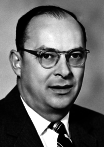
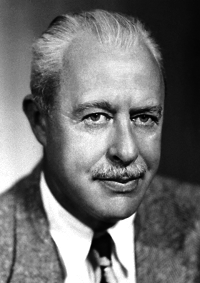
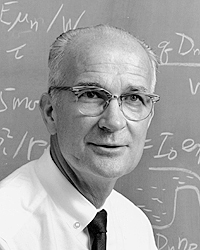
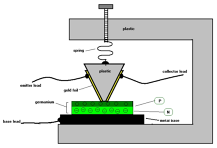
A tiny device made of germanium, gold foil, and a paper clip replaced the vacuum tube and made the modern world possible. On December 16, 1947, physicists John Bardeen and Walter Brattain demonstrated the first working transistor at Bell Telephone Laboratories in Murray Hill, New Jersey, with their colleague William Shockley providing the theoretical framework. The invention earned all three the Nobel Prize in Physics in 1956. Bell Labs had been pursuing solid-state amplification for years. Vacuum tubes, which amplified electrical signals in telephones, radios, and early computers, were bulky, fragile, power-hungry, and generated enormous heat. The telephone network alone used millions of them, and their constant failure was a major engineering headache. Bardeen and Brattain achieved the breakthrough by pressing two closely spaced gold contacts into the surface of a germanium crystal. When a small current was applied to one contact, it amplified the current flowing through the other. The device, called a point-contact transistor, was crude but proved the principle that solid materials could amplify electrical signals without vacuum tubes. Shockley, frustrated that the discovery happened without him, developed the more practical junction transistor in 1948, which became the basis for commercial production. Personal rivalries fractured the collaboration. Shockley left Bell Labs to found Shockley Semiconductor in Palo Alto, where his abrasive management drove away eight key employees who founded Fairchild Semiconductor, which spawned Intel. The chain of departures seeded Silicon Valley. The transistor replaced vacuum tubes in radios by the mid-1950s and in computers by the early 1960s, eventually shrinking to nanometer scale on integrated circuits containing billions of transistors. Every smartphone, laptop, and data center on Earth descends from that germanium crystal in a New Jersey laboratory.
December 16, 1947
79 years ago
Key Figures & Places
What Else Happened on December 16
The law professors of Constantinople opened two new books and discovered 1,500 years of legal arguments had just been declared obsolete. Justinian's commission …
The most powerful man in Francia died with a succession plan that lasted about five minutes. Pepin of Herstal had united the Frankish kingdoms through thirty ye…
An Lushan commanded 164,000 troops when he declared himself emperor at Yanjing — not against the Tang emperor he'd charmed for years, but against Chancellor Yan…
Emperor Go-Kameyama surrendered the Imperial Regalia to his rival, Go-Komatsu, ending the sixty-year schism between the Northern and Southern Courts of Japan. T…
Ten-year-old Henry VI received the crown of France at Notre Dame, a desperate attempt by the English to solidify their claim to the throne during the Hundred Ye…
Dias had sailed within sight of India's riches nine years earlier, but his crew mutinied. Too scared. Too far. Now da Gama pushed past that same rocky cape with…
Talk to History
Have a conversation with historical figures who witnessed this era. Ask questions, explore perspectives, and bring history to life.