

Planck Presents Quantum Theory: Physics Will Never Be the Same
Max Planck unveils a theoretical derivation for his black-body radiation law that forces energy to exist in discrete packets rather than continuous waves. This radical shift dismantles classical physics and launches the quantum revolution, fundamentally altering our understanding of matter and light at the atomic scale.
December 14, 1900
126 years ago
Key Figures & Places
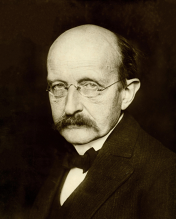
Max Planck
Wikipedia
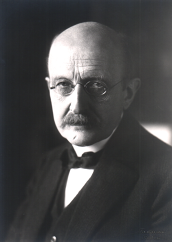
Quantum Mechanics
Wikipedia
Planck's law of black body radiation
Wikipedia
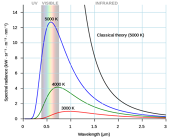
black-body radiation law
Wikipedia

Quantum mechanics
Wikipedia

Max Planck
Wikipedia

Planck's law
Wikipedia

Berlin
Wikipedia

Cuerpo negro
Wikipedia

Théorie des quanta
Wikipedia

Rave
Wikipedia

Mayday (Veranstaltung)
Wikipedia
Techno
Wikipedia

Dortmund
Wikipedia

Westfalenhallen
Wikipedia

Berlin Hamburger Bahnhof
Wikipedia

Strahlungsenergie
Wikipedia
Quantenphysik
Wikipedia

إشعاع حراري
Wikipedia
What Else Happened on December 14
A massive earthquake shattered Constantinople on this day in 557, tearing deep fissures into the city’s infrastructure and collapsing the original dome of the H…
The ground split open beneath the Hagia Sophia. Constantinople's newest marvel—completed just 20 years earlier—swayed but held. The rest of the city wasn't so l…
Emperor Wenzong hid soldiers behind palace curtains, planted them in trees, stationed them everywhere. The signal: dew on a pomegranate tree he'd show the eunuc…
mariage du roi de Francie occidentale Charles II le Chauve, petit-fils de Charles Ier « Magnus » ou « le Grand » (Charlemagne) avec Ermentrude d'Orléans.
Pope John VIII stepped into a papacy under siege. Vikings raided Rome's outskirts. Muslim fleets controlled the Mediterranean. The Holy Roman Empire was fragmen…
The Zuiderzee sea wall collapsed during a massive storm surge, drowning over 50,000 people across the Netherlands and northern Germany. This disaster permanentl…
Talk to History
Have a conversation with historical figures who witnessed this era. Ask questions, explore perspectives, and bring history to life.