

First Chechen War: Yeltsin Sends Troops into Chechnya
Boris Yeltsin ordered Russian troops into Chechnya, igniting a brutal two-year conflict that shattered the region's autonomy and set a precedent for future separatist struggles within the former Soviet Union. The invasion triggered a humanitarian crisis and entrenched deep resentment, fueling decades of instability that would eventually spill over into broader regional violence.
December 11, 1994
32 years ago
Key Figures & Places

Russia
Wikipedia

Boris Yeltsin
Wikipedia

Chechnya
Wikipedia
President of Russia
Wikipedia
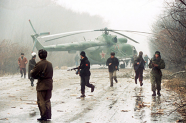
First Chechen War
Wikipedia
Russian President
Wikipedia

First Chechen War
Wikipedia

President of Russia
Wikipedia

Boris Yeltsin
Wikipedia

Chechnya
Wikipedia

Russia
Wikipedia

Caucasus
Wikipedia

Traité de Déoulino
Wikipedia

Poland
Wikipedia

Polish–Lithuanian Commonwealth
Wikipedia

Moskowien
Wikipedia

Rzeczpospolita
Wikipedia

Russian history
Wikipedia

Vladimir Putin
Wikipedia

Base aérienne de Hmeimim
Wikipedia

Intervention militaire de la Russie en Syrie
Wikipedia

Syria
Wikipedia

Fuerzas Armadas de Rusia
Wikipedia
فراس إبراهيم
Wikipedia
What Else Happened on December 11
Cao Pi forces Emperor Xian of Han to abdicate, shattering four centuries of imperial rule and launching the Three Kingdoms period. This power grab fractures Chi…
The last emperor had no choice. Cao Pi—son of the warlord who'd controlled the court for decades—didn't need to kill Emperor Xian. He just needed him to read fr…
Honoratus assumed the role of the first urban prefect of Constantinople, elevating the city to the administrative status of Rome. By establishing this formal mu…
Julian the Apostate entered Constantinople as the undisputed master of the Roman Empire, ending the civil war against his cousin Constantius II. His arrival ini…
Muhammad marched 10,000 followers into Mecca, securing the city with minimal bloodshed after years of exile. This bloodless conquest dismantled the traditional …
Turkish guards assassinate Caliph al-Mutawakkil and install his son al-Muntasir, triggering a decade-long power struggle that fractures Abbasid authority. This …
Talk to History
Have a conversation with historical figures who witnessed this era. Ask questions, explore perspectives, and bring history to life.