

El Mozote Massacre: 900 Civilians Slaughtered
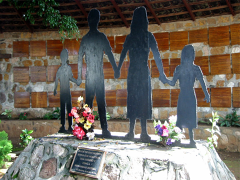
Soldiers of the Atlacatl Battalion moved through the village of El Mozote methodically, separating men from women and children before executing them all. Over three days beginning December 11, 1981, U.S.-trained Salvadoran armed forces killed approximately 900 civilians in what became the worst massacre in modern Latin American history. El Salvador's civil war had been raging for nearly two years, pitting the right-wing military government against leftist FMLN guerrillas. The Atlacatl Battalion, an elite rapid-deployment unit trained at the U.S. Army's School of the Americas in Fort Benning, Georgia, was conducting a scorched-earth operation in the northern Morazan province. Their orders were to eliminate guerrilla support in the region. The soldiers interpreted this as authorization to kill everyone they found. Victims included hundreds of children, some of them infants. Forensic investigations decades later confirmed the accounts of survivor Rufina Amaya, who escaped by hiding behind trees as her husband and four children were murdered. The soldiers burned buildings and slaughtered livestock, leaving the village in ashes. When reporters Raymond Bonner of The New York Times and Alma Guillermoprieto of The Washington Post published accounts of the massacre in January 1982, the Reagan administration and the Salvadoran government dismissed the reports as guerrilla propaganda. The U.S. continued its military aid, ultimately spending over six billion dollars supporting the Salvadoran government during the twelve-year war. The truth emerged fully only after the 1992 peace accords, when a UN Truth Commission confirmed the massacre. In 2012, El Salvador's government formally apologized. The Atlacatl Battalion was disbanded as part of the peace agreement, but no one was ever convicted for the killings.
December 11, 1981
45 years ago
Key Figures & Places



What Else Happened on December 11
Cao Pi forces Emperor Xian of Han to abdicate, shattering four centuries of imperial rule and launching the Three Kingdoms period. This power grab fractures Chi…
The last emperor had no choice. Cao Pi—son of the warlord who'd controlled the court for decades—didn't need to kill Emperor Xian. He just needed him to read fr…
Honoratus assumed the role of the first urban prefect of Constantinople, elevating the city to the administrative status of Rome. By establishing this formal mu…
Julian the Apostate entered Constantinople as the undisputed master of the Roman Empire, ending the civil war against his cousin Constantius II. His arrival ini…
Muhammad marched 10,000 followers into Mecca, securing the city with minimal bloodshed after years of exile. This bloodless conquest dismantled the traditional …
Turkish guards assassinate Caliph al-Mutawakkil and install his son al-Muntasir, triggering a decade-long power struggle that fractures Abbasid authority. This …
Talk to History
Have a conversation with historical figures who witnessed this era. Ask questions, explore perspectives, and bring history to life.