

Germany and Italy Declare War on the United States: WWII Goes Global
Germany and Italy formally declare war on the United States just days after America enters the conflict against Japan, prompting Washington to immediately reciprocate with declarations against both Axis powers. This four-way exchange instantly transforms a regional Pacific struggle into a truly global conflagration, committing the U.S. to fight simultaneously across two oceans while binding its industrial might directly to the European theater.
December 11, 1941
85 years ago
Key Figures & Places

United States
Wikipedia

Nazi Germany
Wikipedia
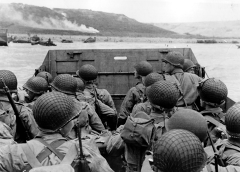
World War II
Wikipedia

Kingdom of Italy (1861–1946)
Wikipedia
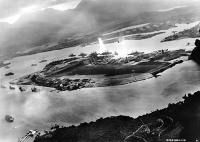
Attack on Pearl Harbor
Wikipedia

World War II
Wikipedia

Nazi Germany
Wikipedia

Japanese
Wikipedia

Attack on Pearl Harbor
Wikipedia

Polish government-in-exile
Wikipedia

Adolf Hitler
Wikipedia

Greece
Wikipedia

Fascist Italy
Wikipedia

United States
Wikipedia

League of Nations
Wikipedia

Second Italo-Ethiopian War
Wikipedia

Ethiopia
Wikipedia

Zeit des Nationalsozialismus
Wikipedia

Geschichte Italiens
Wikipedia

History of the United States
Wikipedia

Kingdom of Italy
Wikipedia
What Else Happened on December 11
Cao Pi forces Emperor Xian of Han to abdicate, shattering four centuries of imperial rule and launching the Three Kingdoms period. This power grab fractures Chi…
The last emperor had no choice. Cao Pi—son of the warlord who'd controlled the court for decades—didn't need to kill Emperor Xian. He just needed him to read fr…
Honoratus assumed the role of the first urban prefect of Constantinople, elevating the city to the administrative status of Rome. By establishing this formal mu…
Julian the Apostate entered Constantinople as the undisputed master of the Roman Empire, ending the civil war against his cousin Constantius II. His arrival ini…
Muhammad marched 10,000 followers into Mecca, securing the city with minimal bloodshed after years of exile. This bloodless conquest dismantled the traditional …
Turkish guards assassinate Caliph al-Mutawakkil and install his son al-Muntasir, triggering a decade-long power struggle that fractures Abbasid authority. This …
Talk to History
Have a conversation with historical figures who witnessed this era. Ask questions, explore perspectives, and bring history to life.