Human Rights Declared: The World Agrees on Dignity
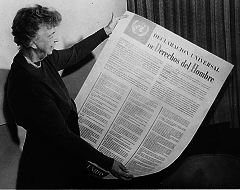
The United Nations General Assembly adopted the Universal Declaration of Human Rights on December 10, 1948, establishing for the first time a common standard of fundamental freedoms for all people. The vote was 48 in favor, none against, and eight abstentions. Eleanor Roosevelt, who had chaired the drafting committee through two years of contentious negotiations, called the document "the international Magna Carta of all men everywhere." No nation dared vote no. The declaration emerged from the ashes of World War II and the Holocaust. The Nuremberg trials had established that crimes against humanity could be prosecuted under international law, but no universal standard existed to define the rights that governments owed their citizens. Roosevelt, appointed to the UN Human Rights Commission by President Truman, assembled a drafting committee that included Lebanese philosopher Charles Malik, French jurist Rene Cassin, and Chinese diplomat P.C. Chang. The committee's challenge was bridging ideological and cultural divides. Western democracies emphasized civil and political rights: freedom of speech, assembly, and religion. The Soviet bloc pushed for economic and social rights: employment, healthcare, and education. Newly independent nations from Asia and Africa insisted on protections against racial discrimination and colonialism. The final document contained 30 articles covering both categories, a compromise that gave everyone something to champion and something to object to. The eight abstentions came from the Soviet Union and its satellites, Saudi Arabia, and South Africa, each objecting to specific provisions that conflicted with their domestic policies. The declaration is not legally binding, but its principles have been incorporated into the constitutions of dozens of nations and form the basis of international human rights law. December 10 is now observed as Human Rights Day worldwide. The document remains the most translated text in human history, available in over 500 languages.
December 10, 1948
78 years ago
Key Figures & Places
What Else Happened on December 10
Michael V was the son of Empress Zoe's sister — not her actual child. She adopted him anyway, desperate for an heir after decades of palace intrigue and three h…
King Birger of Sweden lures his brothers, Dukes Valdemar and Erik, into a trap at Nyköping Castle before imprisoning them. The brothers slowly starve to death i…
Four powers, one target: Venice. The richest city in Europe had swallowed too much mainland territory, threatening papal lands and blocking trade routes that ma…
Albuquerque brought 23 ships and 1,500 men against a city of 100,000. The secret weapon wasn't cannons — it was Timoji, a Hindu privateer who knew every creek a…
Martin Luther publicly incinerated the papal bull Exsurge Domine outside Wittenberg’s Elster Gate, finalizing his break from the Roman Catholic Church. This def…
Two men walked to the scaffold, but their crimes weren't equal. Francis Dereham had been Catherine Howard's lover before she ever met Henry VIII — technically l…
Talk to History
Have a conversation with historical figures who witnessed this era. Ask questions, explore perspectives, and bring history to life.