London's First Traffic Lights: Gas-Lit Signals Emerge
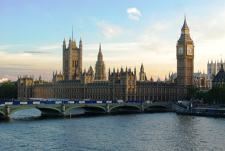
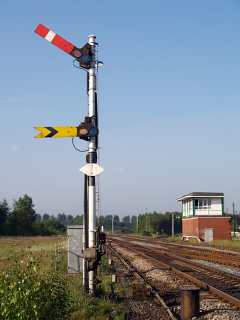
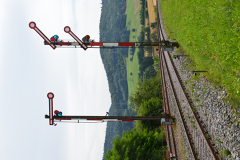
London police officers began operating the world's first traffic signal outside the Palace of Westminster on December 10, 1868, a gas-lit contraption designed to protect Members of Parliament from the crush of horse-drawn carriages on Bridge Street. The device, invented by railway engineer John Peake Knight, used semaphore arms during the day and red and green gas lamps at night. A uniformed constable operated it manually, raising and lowering the arms to control the flow of traffic. Knight had adapted the signaling technology already in use on Britain's railway network, where semaphore arms and colored lights had been managing train movements for decades. London's streets in the 1860s were notoriously dangerous. An estimated 1,100 people were killed annually in traffic accidents, a remarkable figure given that the fastest vehicles were horse-drawn. Pedestrians took their lives in their hands crossing major intersections, and Parliament, located at one of London's busiest junctions, was particularly hazardous. The traffic signal stood roughly 22 feet tall, with a revolving lantern at the top that displayed red for stop and green for caution. The semaphore arms extended horizontally to signal stop and were lowered to a 45-degree angle to indicate that traffic could proceed with care. The system worked well enough during its first weeks of operation, reducing congestion at the intersection and giving pedestrians safe crossing intervals. The experiment ended abruptly on January 2, 1869, when a gas leak caused the lantern to explode, injuring the police constable operating it. London authorities abandoned the device and made no further attempts at mechanical traffic control for decades. Electric traffic signals did not appear until 1912, when Lester Wire installed a system in Salt Lake City. The modern three-color traffic light, with the addition of yellow for caution, was patented by Garrett Morgan in 1923. Knight's gas-lit pioneer had lasted just 23 days.
December 10, 1868
158 years ago
Key Figures & Places
What Else Happened on December 10
Michael V was the son of Empress Zoe's sister — not her actual child. She adopted him anyway, desperate for an heir after decades of palace intrigue and three h…
King Birger of Sweden lures his brothers, Dukes Valdemar and Erik, into a trap at Nyköping Castle before imprisoning them. The brothers slowly starve to death i…
Four powers, one target: Venice. The richest city in Europe had swallowed too much mainland territory, threatening papal lands and blocking trade routes that ma…
Albuquerque brought 23 ships and 1,500 men against a city of 100,000. The secret weapon wasn't cannons — it was Timoji, a Hindu privateer who knew every creek a…
Martin Luther publicly incinerated the papal bull Exsurge Domine outside Wittenberg’s Elster Gate, finalizing his break from the Roman Catholic Church. This def…
Two men walked to the scaffold, but their crimes weren't equal. Francis Dereham had been Catherine Howard's lover before she ever met Henry VIII — technically l…
Talk to History
Have a conversation with historical figures who witnessed this era. Ask questions, explore perspectives, and bring history to life.