

Newton Sends Principia to the Royal Society: Gravity Gets Math
Halley walked into the Royal Society with nine pages that would rewrite physics. Newton had solved it — proved that planets orbit in ellipses not because God pushed them that way, but because gravity's inverse-square law forced it mathematically. He'd done the work in under three months after Halley visited him in Cambridge with a question nobody else could answer. The paper was incomplete, rough, full of geometric proofs Newton would later replace with calculus. But it was enough. Halley recognized immediately what he was reading and spent the next three years begging, cajoling, and ultimately paying for Newton to expand these nine pages into the *Principia*. Without that visit, without that question, Newton might have kept his theory locked in a desk drawer. One astronomer's curiosity turned private genius into public revolution.
December 10, 1684
342 years ago
Key Figures & Places
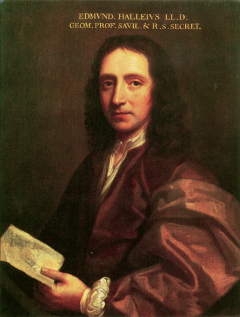
Edmond Halley
Wikipedia
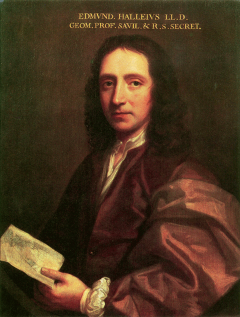
Edmund Halley
Wikipedia
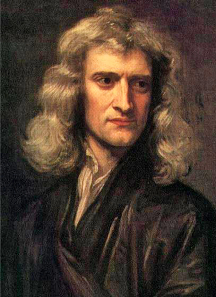
Isaac Newton
Wikipedia
Royal Society
Wikipedia
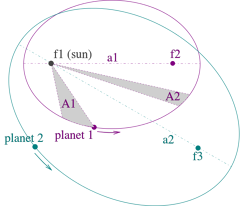
Kepler's laws
Wikipedia
De motu corporum in gyrum
Wikipedia

Isaac Newton
Wikipedia

Kepler's laws of planetary motion
Wikipedia
De motu corporum in gyrum
Wikipedia

Royal Society
Wikipedia

Edmond Halley
Wikipedia
What Else Happened on December 10
Mit Zacharias wird der bislang letzte Grieche als Papst inthronisiert.
Michael V was the son of Empress Zoe's sister — not her actual child. She adopted him anyway, desperate for an heir after decades of palace intrigue and three h…
Der Pariser Bischof Étienne Tempier verurteilt die 13 Thesen des als Averroismus bekannten radikalen Aristotelismus, ohne jedoch dessen Hauptvertreter Siger von…
King Birger of Sweden lures his brothers, Dukes Valdemar and Erik, into a trap at Nyköping Castle before imprisoning them. The brothers slowly starve to death i…
el rey de Aragón, Pedro IV, vence por las armas a la Unión de Valencia.

Four powers, one target: Venice. The richest city in Europe had swallowed too much mainland territory, threatening papal lands and blocking trade routes that ma…
Talk to History
Have a conversation with historical figures who witnessed this era. Ask questions, explore perspectives, and bring history to life.