The First Intifada: Palestinians Rise Against Occupation
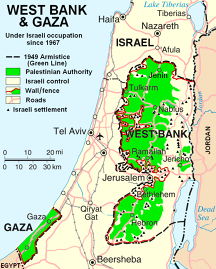
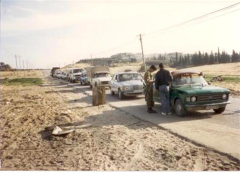
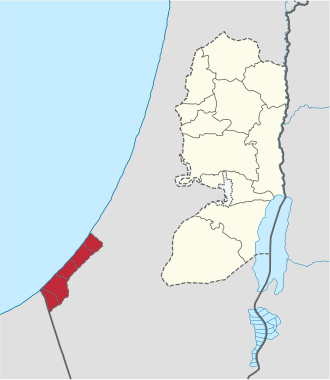
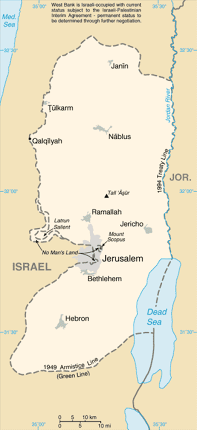
Palestinian residents of the Gaza Strip and West Bank launched a massive popular uprising against Israeli military occupation on December 9, 1987, beginning with stone-throwing protests that spread across the occupied territories within days. The First Intifada, Arabic for "shaking off," was not organized by any political faction but erupted spontaneously after an Israeli army truck struck and killed four Palestinian workers at a Gaza checkpoint. Twenty years of occupation, land confiscation, and daily humiliation had reached a breaking point. The immediate trigger was the traffic incident at the Erez crossing on December 8, which Palestinians believed was deliberate retaliation for the stabbing of an Israeli businessman in Gaza days earlier. Funeral processions the following day turned into massive demonstrations. Protesters threw stones and Molotov cocktails at Israeli soldiers. The army responded with live ammunition, rubber bullets, and tear gas. Within weeks, a general strike had shut down Palestinian businesses and schools across the territories. The Intifada's defining image was Palestinian teenagers confronting Israeli tanks with rocks. The asymmetry of the conflict drew international attention and sympathy in ways that decades of armed resistance had not. Local committees organized boycotts of Israeli products, established underground schools when Israel closed Palestinian institutions, and coordinated civil disobedience campaigns. The PLO, caught off guard from its exile headquarters in Tunis, scrambled to assert leadership over a movement that had begun without it. The uprising lasted until 1993 and killed over 1,000 Palestinians and roughly 160 Israelis. The political consequences were profound. The Intifada convinced Israeli leaders that the occupation could not be sustained through force alone and pushed both sides toward the Oslo peace process. Yasser Arafat and Yitzhak Rabin shook hands on the White House lawn in September 1993, launching a negotiation that produced Palestinian self-governance but ultimately failed to deliver a final peace agreement.
December 9, 1987
39 years ago
Key Figures & Places
What Else Happened on December 9
Odoacer didn't just take Dalmatia — he bought it. The man who'd deposed Rome's last emperor five years earlier paid 2,000 pounds of gold to quiet rivals, then t…
The gates opened at dawn. Not a sword drawn, not a drop of blood. Belisarius walked into Rome with 5,000 men while the Ostrogothic garrison — outnumbered, under…
The gates stood open. No battle, no siege — just an empty city. Belisarius rode into Rome on December 9th with his Byzantine army, and the Ostrogothic garrison …
Al-Jarrah ibn Abdallah had crushed rebellions across three continents. Then he rode into the Caucasus foothills with 25,000 men and met the Khazars waiting in t…
Pope Martin V issued a papal bull establishing the Catholic University of Leuven, creating the first university in the Low Countries. This institution became a …
Švitrigaila's forces clash with Sigismund Kęstutaitis near Oszmiana, igniting the most violent phase of the Lithuanian Civil War. This battle fractures the Gran…
Talk to History
Have a conversation with historical figures who witnessed this era. Ask questions, explore perspectives, and bring history to life.