Smallpox Eradicated: Humanity Wins Global Health War
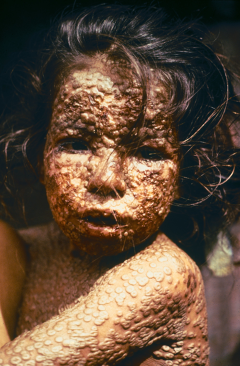
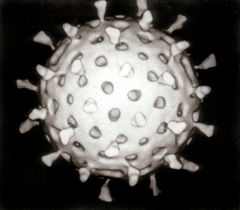
A global commission of scientists certified on December 9, 1979, that smallpox had been eradicated from the face of the Earth, making it the first and still only human disease driven to extinction by deliberate effort. The announcement capped a twelve-year campaign by the World Health Organization that vaccinated hundreds of millions of people across some of the most remote and conflict-ridden regions on the planet. No medical achievement before or since has saved as many lives. Smallpox had haunted humanity for at least 3,000 years. The variola virus killed roughly 30 percent of those it infected and left survivors scarred and often blind. In the 20th century alone, an estimated 300 million people died of the disease, more than all the century's wars combined. Edward Jenner had demonstrated in 1796 that cowpox inoculation could prevent smallpox, but vaccination alone could not eliminate the virus as long as outbreaks continued in regions with poor healthcare infrastructure. The WHO launched its Intensified Eradication Program in 1967 under the leadership of American epidemiologist D.A. Henderson. The strategy shifted from mass vaccination to "ring vaccination," which targeted the contacts and communities surrounding each new case rather than attempting to vaccinate entire populations. Field workers tracked outbreaks through surveillance networks, sometimes traveling by foot or canoe to reach isolated villages. The last known natural case occurred in Somalia in October 1977, when hospital cook Ali Maow Maalin contracted the virus and survived. The certification on December 9, 1979, was formally endorsed by the World Health Assembly in May 1980. Remaining stocks of the variola virus were consolidated at two laboratories: the CDC in Atlanta and the VECTOR Institute in Russia. Debates over whether to destroy these final samples have continued for decades. The eradication of smallpox remains proof that global cooperation, sustained funding, and rigorous science can defeat even humanity's oldest enemies.
December 9, 1979
47 years ago
Key Figures & Places
What Else Happened on December 9
Odoacer didn't just take Dalmatia — he bought it. The man who'd deposed Rome's last emperor five years earlier paid 2,000 pounds of gold to quiet rivals, then t…
The gates opened at dawn. Not a sword drawn, not a drop of blood. Belisarius walked into Rome with 5,000 men while the Ostrogothic garrison — outnumbered, under…
The gates stood open. No battle, no siege — just an empty city. Belisarius rode into Rome on December 9th with his Byzantine army, and the Ostrogothic garrison …
Al-Jarrah ibn Abdallah had crushed rebellions across three continents. Then he rode into the Caucasus foothills with 25,000 men and met the Khazars waiting in t…
Pope Martin V issued a papal bull establishing the Catholic University of Leuven, creating the first university in the Low Countries. This institution became a …
Švitrigaila's forces clash with Sigismund Kęstutaitis near Oszmiana, igniting the most violent phase of the Lithuanian Civil War. This battle fractures the Gran…
Talk to History
Have a conversation with historical figures who witnessed this era. Ask questions, explore perspectives, and bring history to life.