

Battle of Ayacucho: South America's Last Colonial Battle
General Antonio Jose de Sucre's patriot forces crushed the last major Royalist army at Ayacucho, capturing the Spanish viceroy and effectively ending three centuries of colonial rule in South America. The victory sealed Peruvian independence and completed the liberation campaigns that Simon Bolivar and Jose de San Martin had waged for over a decade.
December 9, 1824
202 years ago
Key Figures & Places
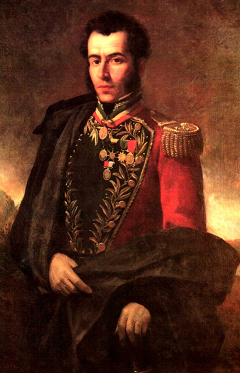
Antonio José de Sucre
Wikipedia
Battle of Ayacucho
Wikipedia
Peruvian War of Independence
Wikipedia

Antonio José de Sucre
Wikipedia

Battle of Ayacucho
Wikipedia

Peruvian War of Independence
Wikipedia

Peru
Wikipedia

Royalist (Spanish American independence)
Wikipedia

South America
Wikipedia

Spanish American wars of independence
Wikipedia

Santuario histórico de la Pampa de Ayacucho
Wikipedia

Ayacucho
Wikipedia

Parliament
Wikipedia

Dina Boluarte
Wikipedia
Référendum constitutionnel péruvien de 2018
Wikipedia

Corruption
Wikipedia
Geschichte Südamerikas
Wikipedia

Viceroyalty of Peru
Wikipedia

José de la Serna
Wikipedia

Spanish Empire
Wikipedia
What Else Happened on December 9
Odoacer didn't just take Dalmatia — he bought it. The man who'd deposed Rome's last emperor five years earlier paid 2,000 pounds of gold to quiet rivals, then t…
Odoacre, premier roi d’Italie, occupe la Dalmatie. Il y établit plus tard son pouvoir politique, avec la coopération du Sénat romain.
The gates stood open. No battle, no siege — just an empty city. Belisarius rode into Rome on December 9th with his Byzantine army, and the Ostrogothic garrison …

The gates opened at dawn. Not a sword drawn, not a drop of blood. Belisarius walked into Rome with 5,000 men while the Ostrogothic garrison — outnumbered, under…
bataille du chameau, entre le clan des Quraychites, à La Mecque, et les fidèles d'Ali ibn Abi Talib.
Al-Jarrah ibn Abdallah had crushed rebellions across three continents. Then he rode into the Caucasus foothills with 25,000 men and met the Khazars waiting in t…
Talk to History
Have a conversation with historical figures who witnessed this era. Ask questions, explore perspectives, and bring history to life.