

Galileo Reaches Jupiter: Probe Reveals Ocean Moons
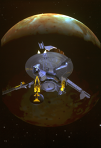
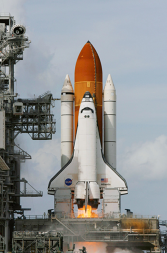
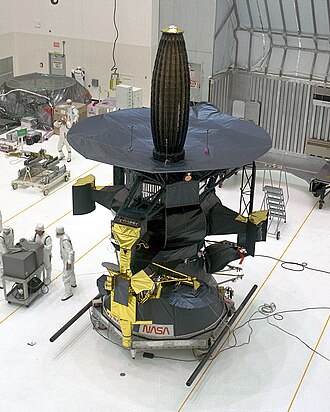
NASA's Galileo spacecraft entered Jupiter's orbit on December 7, 1995, after a six-year journey that included gravity assists from Venus and Earth and a nerve-wracking pass through the asteroid belt. Hours before arrival, a 339-kilogram probe detached from the orbiter and plunged into Jupiter's atmosphere at 170,000 kilometers per hour, transmitting data for 57 minutes before being crushed by pressure equivalent to 23 Earth atmospheres. The mission would spend eight years transforming our understanding of the largest planet in the solar system. Galileo's path to Jupiter was far from straightforward. Originally designed for a direct trajectory aboard the Space Shuttle, the mission was delayed by the 1986 Challenger disaster and redesigned to use a less powerful rocket. The new flight plan required flybys of Venus once and Earth twice to build enough velocity, adding years to the journey. In 1991, the spacecraft's high-gain antenna failed to deploy properly, reducing data transmission rates by a factor of 1,000 and forcing engineers to compress data creatively for the entire mission. Despite the antenna problem, Galileo's discoveries were extraordinary. The spacecraft found strong evidence that Europa, one of Jupiter's four large moons, harbors a liquid water ocean beneath its icy crust, making it one of the most promising locations in the solar system for extraterrestrial life. Galileo observed active volcanism on Io, measured Jupiter's intense magnetic field, and watched the fragments of Comet Shoemaker-Levy 9 slam into the planet's atmosphere in 1994. The mission was deliberately terminated on September 21, 2003, when controllers sent Galileo plunging into Jupiter's atmosphere to prevent any possibility of contaminating Europa with earthly microbes. The spacecraft transmitted data until the increasing pressure silenced it. Galileo's discoveries reshaped planetary science and made Europa a priority target for future exploration, culminating in NASA's Europa Clipper mission launched decades later.
December 7, 1995
31 years ago
Key Figures & Places



What Else Happened on December 7
Soldiers intercepted Marcus Tullius Cicero near his Formia villa, decapitating the orator on orders from Marcus Antonius. By silencing the Republic’s most vocal…
The soldiers found him in his litter, fleeing to the coast. Cicero stuck his head out — told them to get it over with. They cut off his head and both hands. Mar…
Byzantine Emperor Justin II, wracked by recurring seizures of insanity, adopted his general Tiberius and proclaimed him Caesar on this day in 574 AD. This sudde…
Justin II's mind shattered in waves. The seizures came without warning — violent fits where the Byzantine emperor would thrash, scream, rage at phantoms only he…
Qarmatian forces crush the Sajid emir Yusuf ibn Abi'l-Saj near Kufa, dragging him into captivity after a decisive defeat. This victory shatters Sajid control ov…
Connecticut's third-oldest highway wasn't built for cars — it was carved for settlers pushing inland from the coast. In 1696, colonial authorities authorized a …
Talk to History
Have a conversation with historical figures who witnessed this era. Ask questions, explore perspectives, and bring history to life.