

Pearl Harbor Attacked: Japan Bombs the US Fleet, America Enters WWII
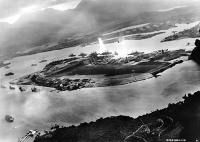
Thirty-five3 Japanese aircraft launched a devastating two-wave strike that sank or damaged eight U.S. battleships and killed 2,403 Americans, instantly shattering domestic isolationism. The United States declared war on Japan the following morning, triggering a chain reaction where Germany and Italy declared war on the U.S., pulling the nation fully into both the Pacific and European theaters of World War II.
December 7, 1941
85 years ago
Key Figures & Places

What Else Happened on December 7
The soldiers found him in his litter, fleeing to the coast. Cicero stuck his head out — told them to get it over with. They cut off his head and both hands. Mar…
Soldiers intercepted Marcus Tullius Cicero near his Formia villa, decapitating the orator on orders from Marcus Antonius. By silencing the Republic’s most vocal…
Justin II's mind shattered in waves. The seizures came without warning — violent fits where the Byzantine emperor would thrash, scream, rage at phantoms only he…
Byzantine Emperor Justin II, wracked by recurring seizures of insanity, adopted his general Tiberius and proclaimed him Caesar on this day in 574 AD. This sudde…
فتح جلولاء آخر معاقل الفرس إثر معركة كبيرة بينهم وبين المسلمين بقيادة هاشم بن عتبة.
Qarmatian forces crush the Sajid emir Yusuf ibn Abi'l-Saj near Kufa, dragging him into captivity after a decisive defeat. This victory shatters Sajid control ov…
Talk to History
Have a conversation with historical figures who witnessed this era. Ask questions, explore perspectives, and bring history to life.