

Planck Shatters Physics: Birth of Quantum Theory
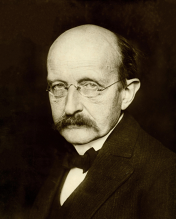
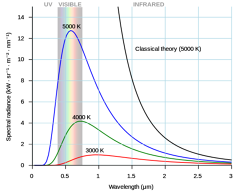
Max Planck presented a mathematical formula to the German Physical Society on December 14, 1900, that shattered three centuries of classical physics. His derivation of the black-body radiation law introduced the revolutionary idea that energy is emitted not in continuous waves but in discrete packets, which he called "quanta." Planck himself was deeply uncomfortable with the implications of his own discovery, spending years trying to reconcile it with classical theory before accepting that he had opened a door that could not be closed. The problem Planck solved had tormented physicists for years. Classical theory predicted that a heated object should radiate infinite energy at ultraviolet frequencies, a result so absurd it was called the "ultraviolet catastrophe." Experimental measurements showed that radiation peaked at a specific frequency and then declined, but no existing theory could explain the curve. Planck spent months fitting equations to the experimental data before arriving at his formula. The key innovation was the assumption that oscillators in the walls of a black body could only emit or absorb energy in discrete amounts proportional to their frequency, expressed by the equation E = hv, where h is a tiny constant now bearing Planck's name. The value of Planck's constant, approximately 6.626 times ten to the negative 34th joule-seconds, defined the granularity of the quantum world. Planck initially considered the quantization a mathematical trick rather than a physical reality. Albert Einstein took Planck's idea further in 1905, arguing that light itself was quantized into particles later called photons. Niels Bohr applied quantum concepts to atomic structure in 1913. Within three decades, quantum mechanics had become the foundation of modern physics, explaining everything from chemical bonding to semiconductor behavior. Planck received the Nobel Prize in 1918 for his discovery. The reluctant revolutionary had started a scientific transformation that dwarfed even his own considerable imagination.
December 7, 1900
126 years ago
Key Figures & Places


What Else Happened on December 7
Soldiers intercepted Marcus Tullius Cicero near his Formia villa, decapitating the orator on orders from Marcus Antonius. By silencing the Republic’s most vocal…
The soldiers found him in his litter, fleeing to the coast. Cicero stuck his head out — told them to get it over with. They cut off his head and both hands. Mar…
Byzantine Emperor Justin II, wracked by recurring seizures of insanity, adopted his general Tiberius and proclaimed him Caesar on this day in 574 AD. This sudde…
Justin II's mind shattered in waves. The seizures came without warning — violent fits where the Byzantine emperor would thrash, scream, rage at phantoms only he…
Qarmatian forces crush the Sajid emir Yusuf ibn Abi'l-Saj near Kufa, dragging him into captivity after a decisive defeat. This victory shatters Sajid control ov…
Connecticut's third-oldest highway wasn't built for cars — it was carved for settlers pushing inland from the coast. In 1696, colonial authorities authorized a …
Talk to History
Have a conversation with historical figures who witnessed this era. Ask questions, explore perspectives, and bring history to life.