

Zhukov Strikes Back at Moscow: Wehrmacht Reels
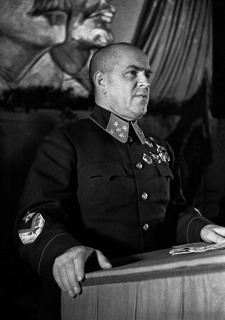
General Georgy Zhukov unleashed a massive Soviet counteroffensive against the frozen, exhausted Wehrmacht on December 5, 1941, shattering Adolf Hitler's assumption that the Soviet Union would collapse before winter. Over one million fresh Soviet troops, many of them Siberian divisions equipped for arctic warfare, slammed into German lines stretched across a 600-mile front around Moscow. The attack threw the Germans back between 100 and 250 kilometers and marked the first major defeat of Hitler's army in World War II. Operation Barbarossa, launched on June 22, 1941, had driven deep into Soviet territory through the summer and fall. By early December, German advance units could see the spires of the Kremlin through their binoculars. But the Wehrmacht had outrun its supply lines. Soldiers lacked winter clothing. Tanks and trucks refused to start in temperatures that plunged below minus 30 degrees Celsius. Frostbite casualties exceeded combat losses in many units. Zhukov had been gathering reserves from Siberia and Central Asia after intelligence from spy Richard Sorge confirmed that Japan would strike south toward the Pacific rather than attack the Soviet Far East. Stalin, trusting Zhukov's judgment after months of disastrous interference, gave him operational freedom. The counterattack launched along the entire front simultaneously, catching German commanders who believed the Soviets had no reserves left to commit. The German retreat was chaotic. Hitler issued a "no retreat" order, firing generals who pulled back and demanding that every position be held to the last man. The order may have prevented a complete rout, but it also locked German forces into positions where they took devastating casualties. Moscow was saved, and the myth of German invincibility was broken. The war in the East would grind on for three and a half more years, but after December 1941, no serious military analyst believed the Soviet Union would fall.
December 5, 1941
85 years ago
Key Figures & Places
World War II
Wikipedia
Georgy Zhukov
Wikipedia
Battle of Moscow
Wikipedia

World War II
Wikipedia

Battle of Moscow
Wikipedia

Georgy Zhukov
Wikipedia

Ravenna
Wikipedia

Red Army
Wikipedia

Wehrmacht
Wikipedia
Blitzkrieg
Wikipedia

Eastern Front (World War II)
Wikipedia

Italy
Wikipedia

British
Wikipedia

Romania
Wikipedia

Finland
Wikipedia

Hungary
Wikipedia

Earthquake
Wikipedia
Moment magnitude scale
Wikipedia

Africa
Wikipedia

Democratic Republic of the Congo
Wikipedia
What Else Happened on December 5
Cicero had already driven Catiline from Rome with three blistering speeches. But the conspirators left behind? Still plotting, still dangerous, still inside the…
The first civil partnership registered in the UK wasn't some quiet registry office ceremony — it was a timed media event at midnight. Shannon Sickles and Grainn…
Isidore of Seville was 73, nearly blind, and hadn't left his library in years. But he hauled himself to Toledo anyway. The council he presided over in 633 wasn'…
The bishops gathered in Toledo wanted one thing: to stop the chaos. For decades, Visigothic Spain had been ripping itself apart—kings murdered, nobles switching…
Charlemagne assumed sole control of the Frankish kingdom following the sudden death of his brother, Carloman. By consolidating these fractured territories under…
A massive earthquake shatters the Jordan Rift Valley on December 5, 1033, leveling cities across the Levant and spawning a devastating tsunami that drowns thous…
Talk to History
Have a conversation with historical figures who witnessed this era. Ask questions, explore perspectives, and bring history to life.