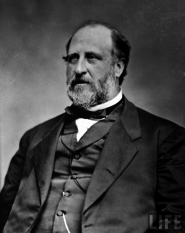
Boss Tweed Arrested: End of Tammany Hall Corruption
William "Boss" Tweed escaped from Ludlow Street Jail on December 4, 1875, slipping away during a home visit and launching one of the most improbable fugitive journeys in American political history. Tweed, the former ruler of New York City's Tammany Hall machine, had stolen an estimated $200 million in public funds through systematic graft and fraudulent city contracts. His escape from custody was a final act of defiance by a man who had once controlled every lever of power in America's largest city. Tweed had dominated New York politics throughout the 1860s and early 1870s, placing loyalists in every city office from the mayor's seat to the parks department. His ring inflated construction costs, invented fictitious vendors, and skimmed percentages from virtually every municipal transaction. The new county courthouse, budgeted at $250,000, cost taxpayers $13 million. Thomas Nast's devastating cartoons in Harper's Weekly and a series of exposes in the New York Times finally turned public opinion against the machine. Tweed was convicted in 1873 and sentenced to prison, but his influence was such that he was permitted daily home visits from Ludlow Street Jail, a minimum-security facility for white-collar offenders. During one such visit, he simply walked out, fled to Florida, then boarded a ship to Cuba, and eventually reached Spain. Spanish authorities arrested him in Vigo, reportedly identifying him from one of Nast's cartoons, which had circulated internationally. Tweed was extradited back to New York and returned to Ludlow Street Jail, where he died on April 12, 1878, at age 55. His reign and fall exposed the vulnerability of urban democracy to organized corruption and inspired civil service reforms that slowly professionalized American city government. The Tweed courthouse still stands behind City Hall, a granite monument to the scale of one man's greed.
December 4, 1875
151 years ago
Key Figures & Places

What Else Happened on December 4
A Roman officer discovers his daughter has converted to Christianity. He locks her in a tower. She escapes, gets baptized, returns. He drags her before the pref…
Carloman was 20 when he died. His widow fled immediately to Italy with their sons — she knew what was coming. Charlemagne absorbed his brother's kingdom before …
Emperor Otto I forced the election of the lay official Leo VIII to the papacy, asserting imperial control over the Roman Church. This move deposed the incumbent…
King Baldwin I of Jerusalem captured the coastal city of Sidon with the support of a Norwegian fleet led by King Sigurd the Crusader. This victory secured a vit…
The Crusaders starved Sidon for 47 days. No relief came from Egypt. No help arrived from Damascus. The city's Muslim governor finally opened the gates on Decemb…
Baldwin I of Jerusalem and Sigurd the Crusader of Norway seize Sidon, securing a vital coastal foothold that expands Frankish control along the Levantine shore.…
Talk to History
Have a conversation with historical figures who witnessed this era. Ask questions, explore perspectives, and bring history to life.