

First Nuclear Chain Reaction: Fermi Splits the Atom Under a Football Stadium
Enrico Fermi's team ignites Chicago Pile-1, triggering the world's first self-sustaining nuclear chain reaction and proving atomic energy could be harnessed for power or weapons. This breakthrough instantly shifted global strategy, pushing Allied leaders to accelerate uranium enrichment programs that would soon yield the bombs ending the war.
December 2, 1942
84 years ago
Key Figures & Places
World War II
Wikipedia
Manhattan Project
Wikipedia
nuclear chain reaction
Wikipedia
Enrico Fermi
Wikipedia
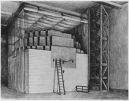
first self-sustaining nuclear chain reaction
Wikipedia

World War II
Wikipedia

Manhattan Project
Wikipedia

Enrico Fermi
Wikipedia

Chicago Pile-1
Wikipedia

German Air Force
Wikipedia

World War I
Wikipedia

Chicago
Wikipedia

University of Chicago
Wikipedia
Kettenreaktion
Wikipedia

Nuclear power
Wikipedia

Belgrade
Wikipedia

Austria-Hungary
Wikipedia
Geschichte Serbiens
Wikipedia
Nuclear reactor
Wikipedia

United States
Wikipedia

Italy
Wikipedia
What Else Happened on December 2
en la mezquita de Córdoba (España) es elegido como nuevo califa Abderramán V (hermano del difunto Muhammad II al-Mahdi), quien toma el título de al-Mustazhir bi…
Pope Innocent IV arrived in Lyon to escape the suffocating political pressure of Holy Roman Emperor Frederick II, turning the French city into the temporary hea…
The University of Leipzig opened because German masters at Prague got tired of being outvoted 3-to-1 by Bohemian colleagues. King Wenceslaus IV had just flipped…
Zur Finanzierung von Feldzügen gegen die Hussiten billigt der Reichstag zu Frankfurt unter dem römisch-deutschen König Sigismund eine Reichskriegssteuer, später…
Während der Appenzellerkriege kommt es zum Gefecht bei der Letzi, aus dem Friedrich VII. von Toggenburg siegreich hervorgeht. Die geschlagenen Appenzeller geben…
Johann Giskra nimmt den walachischen Fürsten Vlad III. Drăculea durch eine Täuschung gefangen und übergibt ihn dem ungarischen König Matthias Corvinus.
Talk to History
Have a conversation with historical figures who witnessed this era. Ask questions, explore perspectives, and bring history to life.