

Monroe Doctrine: America Warns Europe to Stay Away
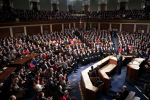
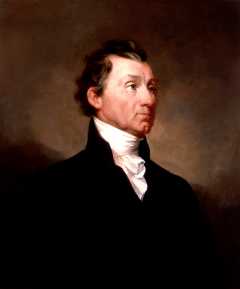
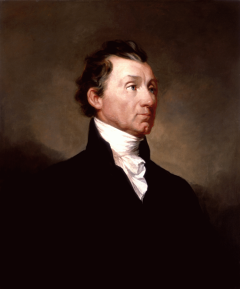
President James Monroe stood before Congress on December 2, 1823, and drew an invisible line across two continents. European powers were warned that any attempt to colonize or interfere with nations in the Western Hemisphere would be viewed as an act of aggression against the United States. The declaration, buried in a routine annual message, became the foundational doctrine of American foreign policy for two centuries. The immediate trigger was a wave of independence movements sweeping Latin America. Spain's former colonies, from Mexico to Argentina, had broken free during the Napoleonic Wars, and Monroe's administration feared that the reactionary Holy Alliance of Russia, Prussia, and Austria might help Spain reclaim them. Britain, which profited from trade with the new republics, privately suggested a joint Anglo-American declaration. Secretary of State John Quincy Adams argued that the United States should speak alone rather than appear as a junior partner of the Royal Navy. Adams shaped the doctrine's three core principles: no new European colonization in the Americas, no European interference with independent American nations, and American non-interference in existing European colonies or European affairs. The declaration carried no enforcement mechanism. The U.S. Navy in 1823 was a fraction of the Royal Navy's size. In practice, British sea power, not American resolve, kept European monarchies from reconquering Latin America. The Monroe Doctrine's true force emerged decades later. Presidents Polk, Theodore Roosevelt, and Kennedy each invoked it to justify interventions from the Mexican-American War to the Cuban Missile Crisis. Roosevelt's 1904 corollary turned the doctrine from a defensive shield into a license for American intervention throughout Latin America. What began as a bluff by a young republic became the ideological scaffolding for hemispheric dominance.
December 2, 1823
203 years ago
Key Figures & Places
What Else Happened on December 2
Pope Innocent IV arrived in Lyon to escape the suffocating political pressure of Holy Roman Emperor Frederick II, turning the French city into the temporary hea…
The University of Leipzig opened because German masters at Prague got tired of being outvoted 3-to-1 by Bohemian colleagues. King Wenceslaus IV had just flipped…
Christopher Wren watched his cathedral open after 35 years of construction — he was 65, had survived the Great Fire that leveled the old cathedral, fought with …
Sir Christopher Wren's St Paul's Cathedral rises from the ashes of the Great Fire, finally receiving its consecration on this day. The new structure replaced th…
The keeper's wife lit a candle to inspect the lantern room. Within minutes, flames had engulfed John Smeaton's wooden tower — the one that had replaced the orig…
The building still stands. But in 1763, Newport's Jewish congregation numbered maybe 58 families — Portuguese and Spanish refugees who'd fled the Inquisition th…
Talk to History
Have a conversation with historical figures who witnessed this era. Ask questions, explore perspectives, and bring history to life.