Explorer 1 Launches: America Enters the Space Race
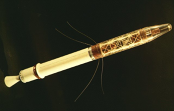
A 30-pound satellite the size of a grapefruit screamed into orbit atop a modified Jupiter-C rocket at 10:48 p.m. on January 31, 1958, and the United States was finally in the space race. Explorer 1, launched from Cape Canaveral, was America''s answer to the Soviet Sputnik launches that had humiliated the nation four months earlier—and within weeks, it delivered a scientific discovery more significant than anything the Soviets had achieved. The pressure on the launch was immense. The Soviet Union had orbited Sputnik 1 on October 4, 1957, and the much larger Sputnik 2 (carrying the dog Laika) on November 3. America''s first attempt, the Vanguard TV-3 on December 6, had exploded on the launch pad in full view of television cameras—a disaster the press dubbed "Flopnik" and "Kaputnik." The Army''s rocket team at the Redstone Arsenal in Huntsville, Alabama, led by the German-born engineer Wernher von Braun, had been begging for permission to launch for over a year. Explorer 1 was built by the Jet Propulsion Laboratory under the direction of William Pickering. The satellite carried a cosmic ray detector designed by James Van Allen of the University of Iowa. When the instrument registered unexpectedly low cosmic ray counts at certain altitudes, Van Allen realized the detector wasn''t malfunctioning—it was being overwhelmed. He had discovered belts of intense radiation trapped by Earth''s magnetic field, later named the Van Allen radiation belts. It was the first major scientific discovery of the Space Age and proved that space exploration could produce fundamental knowledge about the universe. The Juno I rocket that carried Explorer 1 was a direct descendant of the V-2 missiles that von Braun had designed for Nazi Germany during World War II. The irony was not lost on observers: the technology that had rained destruction on London was now opening the frontier of space. Explorer 1 orbited the Earth until 1970, when it re-entered the atmosphere and burned up. Its legacy was the birth of American space science and the founding of NASA, established by Congress seven months later in July 1958.
January 31, 1958
68 years ago
Key Figures & Places

What Else Happened on January 31
Silvester I ascended to the papacy, inheriting a church newly empowered by Emperor Constantine’s Edict of Milan. His long tenure oversaw the construction of the…
A whisper of divine authority in a world still trembling from Constantine's recent Christian revolution. Sylvester didn't just inherit a church—he stepped into …
Blood splattered the frozen Swedish landscape. King Sverker thought he'd crush his young rival decisively—instead, Prince Eric's forces decimated his army in a …
The Mudéjar fighters knew their end was near. Cornered in Murcia after two years of resistance, they'd held out against impossible odds—defending a city where t…
France and Spain partitioned Italy through the Treaty of Lyon, formalizing French control over the north and Spanish authority in the south. This agreement ende…
France ceded the Kingdom of Naples to Aragon through the Treaty of Lyon, formally ending their territorial claims in Southern Italy. This surrender solidified S…
Talk to History
Have a conversation with historical figures who witnessed this era. Ask questions, explore perspectives, and bring history to life.