

Lee Named General-in-Chief: Confederacy's Last Hope
Robert E. Lee accepted the newly created position of General-in-Chief of all Confederate armies on January 31, 1865—a promotion that came so late it amounted to a confession of despair. The Confederacy was collapsing: Sherman had burned his way through Georgia and was turning north into the Carolinas; Grant had Lee pinned in the trenches around Petersburg; and the Confederate Congress, in the same session that elevated Lee, was debating whether to arm enslaved people as soldiers—an admission that the nation founded to preserve slavery could not survive without destroying its own founding principle. The appointment had been advocated by Lee''s supporters for years, but President Jefferson Davis had resisted, viewing it as an encroachment on his constitutional authority as commander-in-chief. Davis and Lee had maintained a functional but sometimes tense relationship throughout the war. Lee, for his part, had focused almost exclusively on the Virginia theater, and his elevation to supreme command raised the question of whether he could impose strategic coherence on distant theaters he had largely ignored—a question the war''s final three months would render moot. Lee immediately took steps that acknowledged military reality. He reinstated Joseph E. Johnston to command the remnants of the Army of Tennessee, which Hood had nearly destroyed at Franklin and Nashville. He tacitly supported the effort to arm enslaved men, telling a Virginia senator that he considered it "not only expedient but necessary." The Confederate Congress passed the legislation on March 13, 1865, but by then it was too late: the war had weeks to live. Lee surrendered the Army of Northern Virginia at Appomattox Court House on April 9, 1865, just 68 days after his promotion. His tenure as general-in-chief was the shortest in American military history and the most futile. The appointment is best understood not as a military decision but as a political one—a last attempt by a dying nation to invest all remaining hope in the one man the Southern public still trusted. That it failed was inevitable; that it was tried at all testified to the depth of the South''s attachment to its greatest general and the desperation of a cause already lost.
January 31, 1865
161 years ago
Key Figures & Places
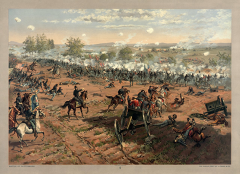
American Civil War
Wikipedia

Confederate States of America
Wikipedia
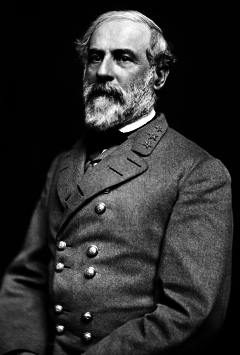
Robert E. Lee
Wikipedia

Confederate
Wikipedia

Robert E. Lee
Wikipedia

American Civil War
Wikipedia

United States
Wikipedia

Nord-Amérindiens
Wikipedia

Indian reservation
Wikipedia

Commander-in-chief
Wikipedia

Confederate States Army
Wikipedia
What Else Happened on January 31
Silvester I ascended to the papacy, inheriting a church newly empowered by Emperor Constantine’s Edict of Milan. His long tenure oversaw the construction of the…
A whisper of divine authority in a world still trembling from Constantine's recent Christian revolution. Sylvester didn't just inherit a church—he stepped into …
Blood splattered the frozen Swedish landscape. King Sverker thought he'd crush his young rival decisively—instead, Prince Eric's forces decimated his army in a …
The Mudéjar fighters knew their end was near. Cornered in Murcia after two years of resistance, they'd held out against impossible odds—defending a city where t…
France and Spain partitioned Italy through the Treaty of Lyon, formalizing French control over the north and Spanish authority in the south. This agreement ende…
France ceded the Kingdom of Naples to Aragon through the Treaty of Lyon, formally ending their territorial claims in Southern Italy. This surrender solidified S…
Talk to History
Have a conversation with historical figures who witnessed this era. Ask questions, explore perspectives, and bring history to life.