

Russia Destroys Ottoman Fleet: Sinop Triggers Crimean War
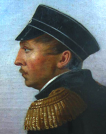
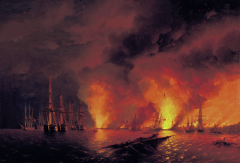
Russian warships annihilated an Ottoman fleet at Sinop on the Black Sea coast on November 30, 1853, killing over 3,000 Turkish sailors in barely four hours. The Battle of Sinop was the last major engagement between wooden sailing fleets and the immediate trigger for Britain and France entering the Crimean War. What had been a regional dispute became a continental conflict. The underlying cause was Russia's claim to protect Orthodox Christians within the Ottoman Empire, a demand masking broader territorial ambitions. Tsar Nicholas I sought dominance over the weakening Ottoman state, which he called "the sick man of Europe." When negotiations failed, Russia occupied the Ottoman principalities of Moldavia and Wallachia. The Ottomans declared war in October 1853. The squadron at Sinop, under Vice Admiral Osman Pasha, had been dispatched to resupply Ottoman positions along the coast. Admiral Pavel Nakhimov found the Ottoman fleet sheltering in Sinop harbor and attacked with six ships of the line and two frigates, deploying explosive Paixhans shells that shattered wooden hulls. The Ottoman fleet, outgunned and trapped against the shore, was destroyed in a one-sided slaughter. Seven frigates and three corvettes were sunk or burned. Osman Pasha was wounded and captured. Only one Ottoman vessel escaped. The British and French press called Sinop a "massacre," giving both governments political cover to enter on the Ottoman side. Britain and France declared war on Russia in March 1854, beginning a conflict that cost roughly 750,000 lives and produced the Charge of the Light Brigade, Florence Nightingale's nursing reforms, and the first war photography. Sinop's shells sank more than wooden ships; they drew Western Europe into a war that reshaped the continent's power balance.
November 30, 1853
173 years ago
Key Figures & Places
Turkey
Wikipedia
Crimean War
Wikipedia
Pavel Nakhimov
Wikipedia
Battle of Sinop
Wikipedia
Imperial Russian Navy
Wikipedia
Military of the Ottoman Empire#Ottoman navy
Wikipedia
Osman Pasha
Wikipedia
Sinop (Turkey)
Wikipedia

Crimean War
Wikipedia

Battle of Sinop
Wikipedia

Imperial Russian Navy
Wikipedia

Pavel Nakhimov
Wikipedia

Military of the Ottoman Empire
Wikipedia

Osman Pasha (naval officer)
Wikipedia

Sinop, Turkey
Wikipedia

Turkey
Wikipedia
Greece
Wikipedia

Greek genocide
Wikipedia

Russian Empire
Wikipedia

Ottoman Empire
Wikipedia

Schwarzmeerflotte
Wikipedia

United Kingdom of Great Britain and Ireland
Wikipedia

Second French Empire
Wikipedia
What Else Happened on November 30
Ancient scribes in what is now Ireland recorded what is believed to be the earliest documented eclipse in human history. The observation reveals that even prehi…
Abu al Abbas paraded through Baghdad to celebrate crushing the Zanj Rebellion, the largest slave revolt in the Arab world. This brutal suppression ended a decad…
Holy Roman Emperor Otto II abandoned his siege of Paris after failing to secure a decisive victory against King Lothair of France. This retreat ended the immedi…
An outnumbered Swedish army of 8,500 soldiers under Charles XII exploited a sudden blizzard to overwhelm a Russian siege force of nearly 40,000 at Narva on Nove…
British forces abandoned their month-long siege of Pensacola, failing to dislodge the Spanish from their strategic foothold in Florida. This retreat solidified …
A stray bullet struck King Charles XII in the head while he inspected trenches at the siege of Fredriksten, ending his life and Sweden’s status as a dominant Ba…
Talk to History
Have a conversation with historical figures who witnessed this era. Ask questions, explore perspectives, and bring history to life.