

Lucy Found in Ethiopia: 3.2 Million Years of Human History
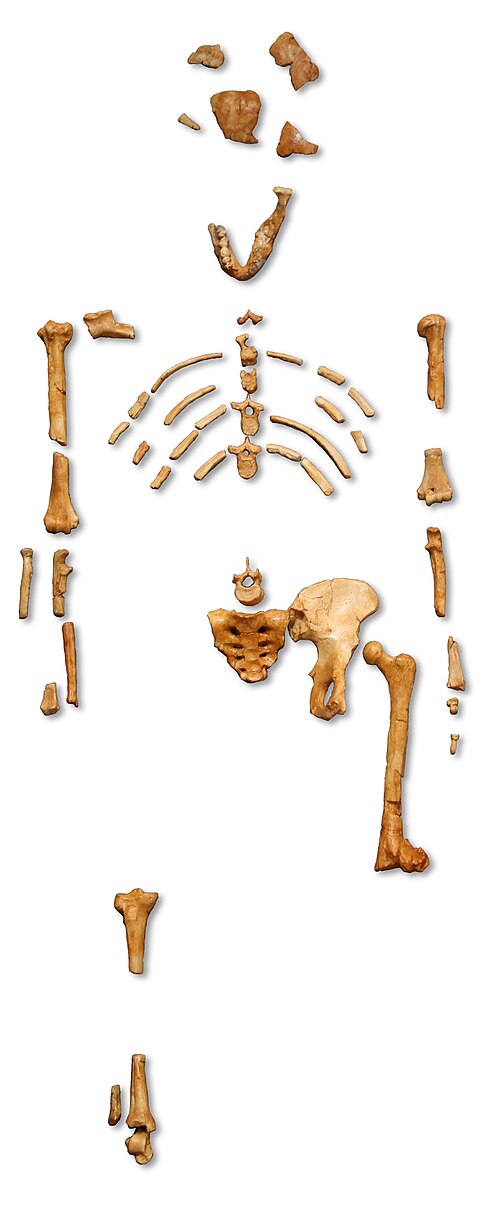
A human knee joint jutting from an Ethiopian hillside turned out to be 3.2 million years old. On November 24, 1974, paleoanthropologist Donald Johanson and graduate student Tom Gray discovered the most complete early hominin skeleton ever found in the Afar Triangle of Ethiopia, a find that rewrote the story of human origins. They named her Lucy, after the Beatles song "Lucy in the Sky with Diamonds," which played on a loop at their camp celebration that night. Johanson and Gray were surveying a gully near the village of Hadar when Johanson spotted a fragment of arm bone on the slope. They quickly realized they were looking at multiple bones from a single individual. Over the following weeks, the team recovered roughly 40 percent of the skeleton, an extraordinary completeness for a fossil of that age. Lucy stood about three and a half feet tall, weighed around 60 pounds, and belonged to a previously unknown species that Johanson later named Australopithecus afarensis. Lucy's anatomy delivered a revolutionary insight. Her pelvis and leg bones showed conclusively that she walked upright on two legs, yet her brain was barely larger than a chimpanzee's. This demolished the long-held assumption that a large brain had evolved first, driving the development of other human traits. Lucy proved the opposite: bipedalism came millions of years before significant brain expansion. Walking upright freed the hands, and that freedom eventually drove the evolutionary pressures that enlarged the brain. The discovery made Lucy the most famous fossil in the world and transformed Ethiopia into the epicenter of paleoanthropological research. Subsequent finds in the same region, including a 3.6-million-year-old set of fossilized footprints at Laetoli in Tanzania, confirmed that upright walking was ancient. Lucy now resides in the National Museum of Ethiopia in Addis Ababa, locked in a vault, too precious to display. A cast stands in her place.
November 24, 1974
52 years ago
Key Figures & Places

Ethiopia
Wikipedia

The Beatles
Wikipedia

Lucy in the Sky with Diamonds
Wikipedia
Australopithecus afarensis
Wikipedia

Donald Johanson
Wikipedia
Lucy (Australopithecus)
Wikipedia
Awash Valley
Wikipedia
Afar Depression
Wikipedia

Donald Johanson
Wikipedia

Australopithecus afarensis
Wikipedia
Lucy (hominid)
Wikipedia

The Beatles
Wikipedia

Lucy in the Sky with Diamonds
Wikipedia

Awash River
Wikipedia

Ethiopia
Wikipedia

Afar Triangle
Wikipedia

Depresión de Danakil
Wikipedia

Gran Valle del Rift
Wikipedia

Paleoantropología
Wikipedia
Hadar (Éthiopie)
Wikipedia

Yves Coppens
Wikipedia

Hominisation
Wikipedia
What Else Happened on November 24
Theodosius I entered Constantinople in a formal adventus, signaling his consolidation of power after years of military instability. By reclaiming the capital, h…
A massive earthquake leveled major urban centers across Syria, Iraq, and the Levant, shattering the infrastructure of Antioch, Damascus, and Mosul. The disaster…
Conrad of Montferrat secured his claim to the throne of Jerusalem by marrying Queen Isabella I, consolidating his authority over the remaining Crusader territor…
Isabella of Jerusalem wed Conrad of Montferrat at Acre, securing his claim to the throne during the height of the Third Crusade. This strategic union consolidat…
Genghis Khan defeated Khwarazmian prince Jalal al-Din at the Battle of the Indus on November 24, 1221, driving the last organized resistance to the Mongol invas…
Assassins attacked Polish Prince Leszek the White, Duke Henry the Bearded, and other Piast rulers while they bathed at an assembly in Gąsawa on November 24, 122…
Talk to History
Have a conversation with historical figures who witnessed this era. Ask questions, explore perspectives, and bring history to life.