Darwin Publishes Origin: Evolution Changes Everything
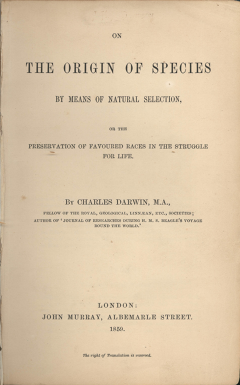
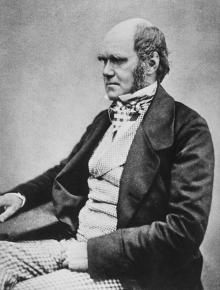
Every copy of the first print run sold out on the first day. Charles Darwin's "On the Origin of Species," published on November 24, 1859, presented an idea so powerful and so dangerous that Darwin had delayed publishing it for twenty years: all living things descended from common ancestors through a process of natural selection, and no divine intervention was required to explain the diversity of life on Earth. Darwin had developed the core of his theory by 1838, after returning from his five-year voyage aboard HMS Beagle. The finches of the Galápagos, the fossils of Patagonia, and the biogeography of oceanic islands had convinced him that species were not fixed creations but mutable forms shaped by their environments. He spent two decades amassing evidence, terrified of the social and religious consequences of publication. He confided to a friend that revealing his theory felt "like confessing a murder." What finally forced his hand was a letter from Alfred Russel Wallace, a young naturalist working in Southeast Asia, who had independently arrived at the same conclusion. Darwin's friends Charles Lyell and Joseph Hooker arranged for a joint presentation at the Linnean Society in July 1858. Darwin then compressed his planned multi-volume work into a single "abstract" of 490 pages, writing at furious speed through months of illness. Publisher John Murray printed 1,250 copies, all claimed by booksellers before publication day. The response was immediate and explosive. The Anglican Church attacked. Thomas Huxley championed Darwin in public debates. The book's argument rested on three observable facts: organisms vary, variations are heritable, and more offspring are produced than can survive. From these facts, natural selection followed as an inevitable consequence. Within a decade, the scientific community broadly accepted evolution, though natural selection remained contested until the 1930s modern synthesis united it with Mendelian genetics.
November 24, 1859
167 years ago
Key Figures & Places
What Else Happened on November 24
Theodosius I entered Constantinople in a formal adventus, signaling his consolidation of power after years of military instability. By reclaiming the capital, h…
A massive earthquake leveled major urban centers across Syria, Iraq, and the Levant, shattering the infrastructure of Antioch, Damascus, and Mosul. The disaster…
Conrad of Montferrat secured his claim to the throne of Jerusalem by marrying Queen Isabella I, consolidating his authority over the remaining Crusader territor…
Isabella of Jerusalem wed Conrad of Montferrat at Acre, securing his claim to the throne during the height of the Third Crusade. This strategic union consolidat…
Genghis Khan defeated Khwarazmian prince Jalal al-Din at the Battle of the Indus on November 24, 1221, driving the last organized resistance to the Mongol invas…
Assassins attacked Polish Prince Leszek the White, Duke Henry the Bearded, and other Piast rulers while they bathed at an assembly in Gąsawa on November 24, 122…
Talk to History
Have a conversation with historical figures who witnessed this era. Ask questions, explore perspectives, and bring history to life.