

Rose Revolution: Shevardnadze Ousted in Georgia
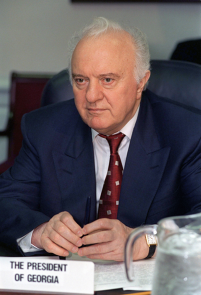
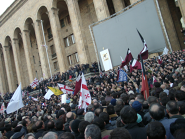
Thousands of Georgians carrying red roses stormed the parliament building in Tbilisi, interrupting President Eduard Shevardnadze's address and forcing him to flee under bodyguard protection. The Rose Revolution, which climaxed on November 23, 2003, toppled a leader who had governed Georgia for a decade and replaced him with a Western-oriented reformer, becoming the first of the "color revolutions" that swept the post-Soviet world. Georgia's November 2 parliamentary elections were blatantly rigged. International observers documented widespread fraud, and exit polls diverged dramatically from official results. Opposition leader Mikheil Saakashvili, a 35-year-old Columbia Law School graduate, channeled public outrage into sustained street protests. Tens of thousands gathered daily in central Tbilisi, braving November cold and the threat of a security crackdown. Saakashvili's movement drew on deep frustration with corruption, economic stagnation, and the country's failure to achieve real independence from Russian influence. The revolution's defining moment came when Saakashvili led supporters directly into parliament, rose in hand, as Shevardnadze attempted to open the new legislative session. The elderly president, who had served as Soviet foreign minister under Mikhail Gorbachev, initially ordered a state of emergency but found that neither the military nor the security services would enforce it. Russian foreign minister Igor Ivanov flew to Tbilisi and brokered Shevardnadze's resignation. Saakashvili won the January 2004 presidential election with 96 percent of the vote. He implemented aggressive anti-corruption reforms, rebuilt infrastructure, and aligned Georgia firmly with the West. The Rose Revolution inspired similar movements in Ukraine and Kyrgyzstan, though the long-term results proved uneven. Saakashvili himself later faced authoritarianism charges, a reminder that revolutionary promise and democratic governance are not always the same thing.
November 23, 2003
23 years ago
Key Figures & Places

What Else Happened on November 23
Thespis of Icaria stepped out of the chorus to deliver solo lines, becoming the first recorded individual actor in Western theater. His innovation of dialogue b…

The most powerful ruler in Western Europe rode into Rome not as a pilgrim but as a judge. Charlemagne, King of the Franks, arrived in the Eternal City in late N…
Saladin entered Damascus and absorbed the city into his growing domain without a fight. Control of this strategic prize gave him the power base to unify Muslim …
Assassins ambushed and killed Prince Leszek I the White during a gathering of Piast dukes at Gąsawa. His death shattered the fragile unity of the Polish princip…
King Ferdinand III of Castile captured Seville after a 16-month siege, taking the largest and wealthiest city remaining under Moorish control in Iberia. The con…
Perkin Warbeck, who had claimed to be the lost prince Richard of York and invaded England twice with foreign backing, was hanged after allegedly attempting to e…
Talk to History
Have a conversation with historical figures who witnessed this era. Ask questions, explore perspectives, and bring history to life.