

Tet Offensive Begins: Viet Cong Launch Surprise Attacks
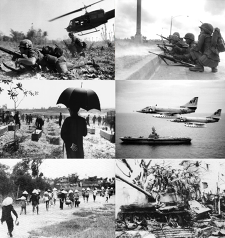
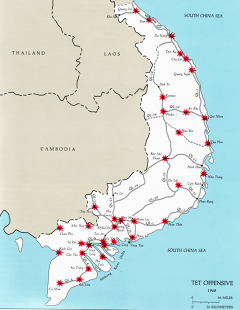
Eighty thousand North Vietnamese and Viet Cong fighters launched simultaneous attacks on more than 100 cities, towns, and military installations across South Vietnam in the early morning hours of January 30, 1968. The Tet Offensive, named for the Vietnamese Lunar New Year holiday during which a ceasefire had been declared, was the largest military operation by either side in the Vietnam War and the event that shattered American confidence in the conflict''s outcome. The timing was calculated to maximize shock. U.S. and South Vietnamese commanders had agreed to a 36-hour holiday truce, and many ARVN soldiers were on leave visiting their families. General William Westmoreland and the American military establishment had spent 1967 insisting that the war was being won—that there was "light at the end of the tunnel." The scale and coordination of the Tet attacks demolished that narrative overnight. In Saigon, a squad of Viet Cong sappers breached the U.S. Embassy compound and held it for six hours, fighting in the embassy courtyard while television cameras broadcast the chaos to American living rooms. The heaviest fighting occurred in the ancient imperial capital of Hue, where North Vietnamese forces seized the Citadel and held the city for 26 days. Marines fought house to house in some of the most brutal urban combat since World War II. During the occupation, North Vietnamese forces executed an estimated 2,800-6,000 civilians and South Vietnamese officials in what became known as the Hue Massacre. Militarily, Tet was a defeat for the communists. The general uprising they had hoped to trigger among South Vietnamese civilians never materialized. Viet Cong losses were devastating—an estimated 32,000 killed and 5,800 captured—effectively destroying the Viet Cong as an independent fighting force. But the political impact in the United States was decisive. Walter Cronkite declared the war a stalemate on national television. Johnson''s approval rating on Vietnam dropped to 26 percent. On March 31, 1968, the president announced he would not seek re-election. Tet proved that in modern war, the battle for public opinion matters more than the battle on the ground.
January 30, 1968
58 years ago
Key Figures & Places


What Else Happened on January 30
Two kingdoms, exhausted from decades of border skirmishes, finally exhaled. The Peace of Bautzen wasn't just ink on parchment—it was Bolesław the Brave of Polan…
Bolesław I the Brave secured his western borders by signing the Peace of Bautzen with Holy Roman Emperor Henry II. This treaty ended sixteen years of brutal war…
King Wareru seized power in Martaban, declaring independence from the crumbling Pagan Kingdom to establish the Hanthawaddy Kingdom. This bold break from central…
A wall of water rose without warning. Twelve-foot waves crashed through villages between Bristol and Wales, sweeping away entire communities in minutes. Farmers…

The Treaties of Munster and Osnabruck, signed on January 30, 1648, ended the Eighty Years' War by compelling Spain to formally recognize Dutch independence afte…
He walked out onto a scaffold wearing two shirts—one to prevent shivering in the cold, the other so nobody would mistake his trembling for fear. King Charles I,…
Talk to History
Have a conversation with historical figures who witnessed this era. Ask questions, explore perspectives, and bring history to life.