Hitler Sworn In: The Nazi Era Commences
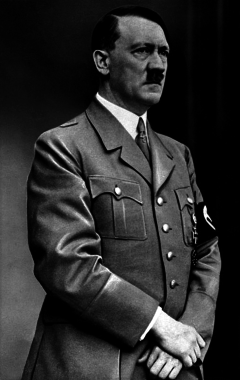
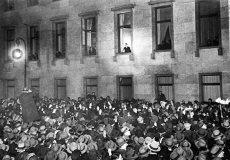
Adolf Hitler was sworn in as Chancellor of Germany on January 30, 1933, in a brief ceremony at the Presidential Palace in Berlin. President Paul von Hindenburg, who privately referred to the Nazi leader as "that Bohemian corporal," administered the oath with visible reluctance. The conservative politicians who had engineered the appointment—former Chancellor Franz von Papen and the Nationalist leader Alfred Hugenberg—believed they could control Hitler and use his mass following to stabilize the government. Within weeks, they had lost control of everything. Hitler had not seized power; he had been handed it. The Nazi Party had won 33 percent of the vote in the November 1932 elections—their second-best result, but actually a decline from 37 percent the previous July. The party was in financial difficulty, and internal dissent was growing. But Weimar Germany''s democratic parties were hopelessly fragmented, and a succession of chancellors had governed by presidential emergency decree. Papen, seeking to return to power through a coalition, convinced the aging Hindenburg that a cabinet with Hitler as chancellor but only two other Nazi ministers could be managed safely. The error was catastrophic and almost immediate. On February 27, the Reichstag burned—likely set by a lone Dutch communist, though the Nazis exploited it as evidence of a communist conspiracy. The next day, Hitler convinced Hindenburg to sign the Reichstag Fire Decree, suspending civil liberties and allowing arrest without trial. On March 23, the Enabling Act gave Hitler the power to govern without Parliament for four years. By July, all political parties except the Nazis had been banned. Trade unions were dissolved, the press was muzzled, and the first concentration camp at Dachau had opened. Papen became vice-chancellor and found himself powerless within months. Hugenberg was forced out of the cabinet by June. Hindenburg died in August 1934, and Hitler merged the offices of president and chancellor, becoming Führer. The twelve years that followed brought world war, the Holocaust, and the deaths of an estimated 70-85 million people. All of it flowed from a backroom political calculation made on a January afternoon by men who thought they were the clever ones.
January 30, 1933
93 years ago
Key Figures & Places
What Else Happened on January 30
Two kingdoms, exhausted from decades of border skirmishes, finally exhaled. The Peace of Bautzen wasn't just ink on parchment—it was Bolesław the Brave of Polan…
Bolesław I the Brave secured his western borders by signing the Peace of Bautzen with Holy Roman Emperor Henry II. This treaty ended sixteen years of brutal war…
King Wareru seized power in Martaban, declaring independence from the crumbling Pagan Kingdom to establish the Hanthawaddy Kingdom. This bold break from central…
A wall of water rose without warning. Twelve-foot waves crashed through villages between Bristol and Wales, sweeping away entire communities in minutes. Farmers…
The Treaties of Munster and Osnabruck, signed on January 30, 1648, ended the Eighty Years' War by compelling Spain to formally recognize Dutch independence afte…
He walked out onto a scaffold wearing two shirts—one to prevent shivering in the cold, the other so nobody would mistake his trembling for fear. King Charles I,…
Talk to History
Have a conversation with historical figures who witnessed this era. Ask questions, explore perspectives, and bring history to life.