

Franco Dies: Spain's 36-Year Dictatorship Ends
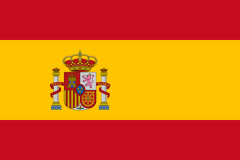
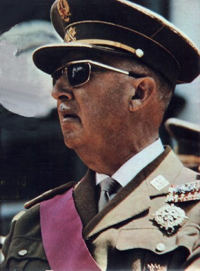
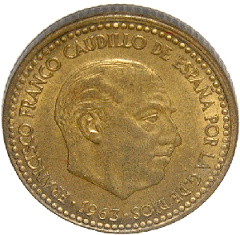
Francisco Franco died in a Madrid hospital at the age of 82, ending a dictatorship that had ruled Spain for 36 years and isolated the country from the democratic transformations sweeping postwar Europe. His death, after weeks of agonized medical intervention that kept his failing body alive far beyond any natural endpoint, released Spain into a transition to democracy that proved remarkably swift and largely peaceful. Franco had seized power through a brutal civil war from 1936 to 1939, overthrowing the elected Second Republic with military support from Hitler's Germany and Mussolini's Italy. The war killed an estimated 500,000 people, and Franco's postwar repression added tens of thousands more to the death toll through executions, imprisonment, and forced labor. Political parties were banned. Press censorship was absolute. Regional languages and identities, particularly Catalan and Basque, were suppressed. The regime survived partly through strategic calculation. Franco kept Spain neutral during World War II despite his debt to the Axis powers, a decision that saved his regime when fascism collapsed elsewhere in 1945. During the Cold War, he positioned Spain as an anti-communist ally, winning American military bases and economic aid in exchange. The 1953 Pact of Madrid with the United States gave Franco international legitimacy that the democratic world had previously denied him. Economic transformation in the 1960s, driven by technocrats from the Catholic organization Opus Dei, modernized Spain's economy through tourism, industrialization, and liberalized trade. Living standards rose dramatically, creating a middle class that increasingly chafed against political restrictions even as it prospered materially. By the time Franco died, Spanish society had outgrown the authoritarian framework imposed upon it.
November 20, 1975
51 years ago
Key Figures & Places
What Else Happened on November 20
A soldier, not a senator. Diocletian climbed from humble Dalmatian origins — possibly born a slave's son — to command Rome's entire imperial machine in 284 AD. …
The deal Emperor Suzong struck was brutal: let the Huihe soldiers loot Luoyang for three days after victory. Three days. A city of hundreds of thousands, handed…
Emperor Henry VI stormed Palermo on Christmas Day, seizing the Sicilian crown through his wife Constance's claim. The conquest united the Holy Roman Empire with…
Henry VI, Holy Roman Emperor, conquered Palermo and claimed the Kingdom of Sicily through his wife Constance, uniting it with the Holy Roman Empire. The conques…
John the Fearless, Duke of Burgundy, signed a truce with Louis of Valois, Duke of Orléans, on November 20, 1407, only to order Louis's assassination three days …
John the Fearless, Duke of Burgundy, and Louis of Valois, Duke of Orleans, agreed to a formal truce brokered by the Duke of Berry to end their escalating rivalr…
Talk to History
Have a conversation with historical figures who witnessed this era. Ask questions, explore perspectives, and bring history to life.